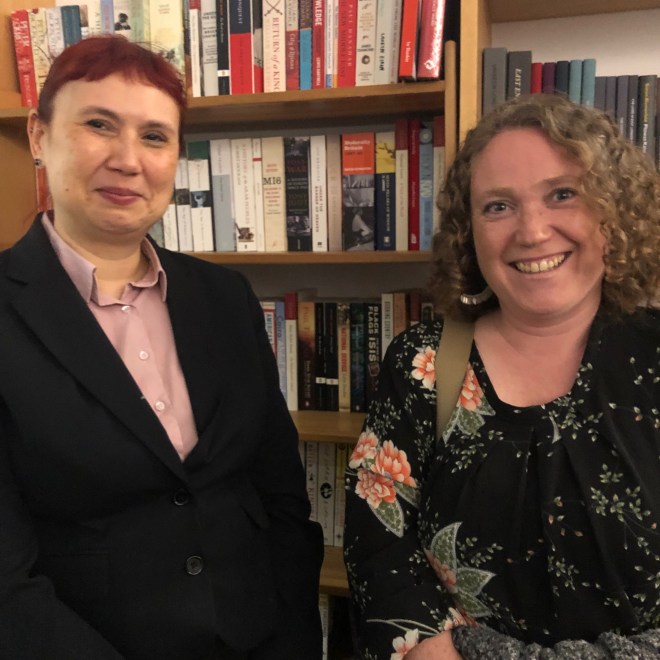
“I would like this book to show people some of the many ways you can f**k with gender rather than always being f**ked over by it” : Dean Atta speaks with Alice Hiller about growing up Black and queer and coming out to yourself, and the world, in feathery, rasor sharp, high-heeled drag in The Black Flamingo.

image002 (1)

Sometimes I read a book which will change lives.   The Black Flamingo by Dean Atta is one.   A novel in verse, interspersed with stand-alone poems, it follows Michael, also Mikey, and Mike, and later The Black Flamingo, from his first hatching at the crack of the new millennium, through the multiple twists and turns, and fully-fledged transformations, that finally lead to his glorious coming out in full drag at university. Written for the YA market, but equally resonant for adult readers, it showcases the spare, intimate voice which led to Dean Atta’s debut collection, I Am Nobody’s Nigger, being shortlisted for the Polari First Book Prize, and saw him named as one of the most influential LGBT people in the UK by the Independent on Sunday. Dean’s poems have been featured widely on radio and tv, as well as on social media, which he works with as powerful channel of communication, using his facebook page to be open about intermittent negotiations with depression, as well as his writing, and performing, and political activism. The Black Flamingo is already picking up rave reviews and fan letters. As the bi-queer mum of an adult queer son, who rocks a mean line in drag himself, I connected with The Black Flamingo at many levels, and valued being able to ask Dean how the project came together and what his intentions were in writing a queer coming of age story that begins in very early childhood and encompasses the black British experience. We also discussed being emotionally truthful, how it felt to speak to a YA readership, at a potentially key moment in their lives – and whether a gender-liberated identity is possible.

AH: There is a scene about three quarters of the way through The Black Flamingo when your teen narrator, Michael, is asked in a barbershop, what he writes about. He replies:

I don’t say Coming out as gay.
I don’t say Sleeping with men.
I say ‘Identity and stuff.’

He doesn’t ask me anything else.

Have you sometimes felt that Michael’s story, of growing up Black-Greek-Cypriot-British, and finding and claiming a Drag identity, is one that people have resisted, or felt uncomfortable, about hearing?   If so, did this contribute to your impulse to write?

BedDA: I judged it in terms of Michael’s feelings of comfort and safety with whomever he is talking to. There is an earlier part of the book when Michael takes his time to figure out if he wants to tell his school friend Daisy that he is gay. I think I come from the school of thought that you’re sexuality is not necessarily everyone’s business, and it’s up to each person to decide if they want to come out and who they want to come out to. Coming out isn’t something you just do once and it’s over and done with. Michael finds himself coming out over and over again. By this point in the book Michael has come out to many people including his extremely supportive mother. I wanted to show him having lots of positive coming out experiences, throughout the book. However, the barbershop isn’t a place I could in good conscience locate one of these positive coming out moments. I would not feel comfortable to talk about my sexuality in a barbershop. There’s a lot said in barbershops that makes them feel unsafe in many ways.

AH: You begin, in the Prologue:

IMG_1639

Throughout, your narrative combines teenage and child selves, and flamingo and human selves. Was it a challenge to create a structure to hold so many intertwining strands? How did you set about it?

DA: Everything about writing this book was a challenge. The only easy part was getting the publishing deal because I didn’t do that, my agent Becky Thomas did. Once I was under contract to write the book the logistics of writing a verse-novel immediately became very daunting. I was very unsure how I was going to pull it off. The flamingo metaphor was central to the book and had to appear from the beginning and so the idea of the egg came to me quite early. There’s repetition of eggs, feathers and flight imagery throughout the book. Some were written into the very first draft of the book but many were added when I was redrafting. I initially wrote the whole book with Michael as a teenager starting when he sees The Black Flamingo when he’s on holiday in Cyprus, with all the earlier childhood stuff in flashbacks. However my editor Polly Lyall-Grant suggested that we could start with his early childhood and tell it chronologically. When I had moved everything into a chronological sequence we found it flowed much better as a story.

AH: The Black Flamingo is told in the first person, beginning with Michael’s parallel egg and millennium births, and his human parents’ separation.  It then cuts straight to his sixth birthday – for which he has asked for a Barbie. Michael’s words have complete clarity and believability, which comes across compellingly when you perform them. I wondered if you were you interested in capturing the voice of early childhood, for personal as well as political reasons? The early ‘chapters’ have great titles – ‘Barbies and Belonging’, ‘Sandcastles’.

DA: Michael’s childhood was initially written from the perspective of a teenager looking back knowingly on these younger memories. However when we changed this to have Michael’s narration start at six years old and age through the book I had to go back and rework these scenes to be more naive and less knowing. Capturing the voice of a six, seven, eight year old was really fun in terms of limiting the vocabulary and knowledge of the narrator without losing any of the emotional truth or poignancy of the poems. I had to take care not to put adult intentions, motivations or interpretations onto the actions of Michael in his childhood.

AH: At a time when education about identity and orientation is being challenged in some schools, did you feel that giving witness to the formation and articulation of a queer identity from when it starts to have consciousness of itself, was an important act, politically?  Fierce


DA: It’s an authentic story that is similar to my own in many ways so it just felt like I was telling the truth. In the sense that there was an emotional truth to the book, even though it is a work of fiction. It can be viewed as a political statement but it was just the best way to tell Michael’s story. Meeting Michael as a child makes the story somewhat similar a firework with a long fuse; a slow burn and big bang. What was most important for me about writing this book is that I wanted it to be full of love and optimism, I wanted Michael to have a loving family and friends that he could fall back on when he encountered more hostile and negative forces in the world.

AH: I read The Black Flamingo as bi-queer woman, and the mother of a queer adult son. It is incredibly moving, and totally gripping, partly because Michael/Mike and his mum are so warm, and human and believable, and involving. It is also really powerful because of the ways it shows his identity forming itself, relative to the world in which he moves, and the friendships he makes – and the challenges he faces through school, and then into university. It’s been published by Hodder Children’s Books, and is aimed at YA readers. I wondered what led you and your publishers to position it in this way? Your debut, I Am Nobody’s Nigger, was an adult publication. The Black Flamingo felt to me like a book I will be giving to both adults, and teenagers.

KissDA: Polly at Hodder is a children’s book editor so Young Adult fiction was the only option if I was to publish with her. I also had interest from a poetry publisher to do The Black Flamingo as a straightforward poetry collection and a non-fiction editor at another publisher to rewrite it as a memoir but I wasn’t so interested in writing about myself, I wanted to try something else. So creating a character seemed more appealing to me and writing a verse-novel seemed like an exciting challenge. Polly gave me lots of editorial support along the way to make sure the story was appropriate for teenagers and I arranged a number of readings with school groups and university students whilst working on the book to check we were getting it right.

AH: Was there a reason for Michael to be born in 1999, which I believe makes him a little younger than you are?

DA: Michael is much younger than me, I was born in 1984. I was sure that I didn’t want to make the book a throwback to the 90s and noughties. I wanted to use contemporary references and deal with the concerns of teenagers today. I wanted Michael to be a teenager today, so I worked backwards from there to pick his year of birth. Some pop culture references got confusing because certain movies have been remade from the 80s and 90s, and some music artists have been around for ages so I had to ask myself, Which version of the movie would Michael have seen and would he actually be into that singer or is that just my own childhood seeping out through him?

How to Come Out 1AH:  Your text combines the ongoing narrative of the novel-in-verse with shorter inset poems, laid out on lightly lined pages, as if taken from a notebook, and text messages in rectangular bubbles. Was it important to you to embrace multiple forms of typography, as well as different forms of poetry-making, within the project to create a more open, possible feeing?

DA: I just wrote the words. In some cases I specified that this would be written in his notebook or this would be on a mobile phone screen. But the design elements of the book are down to the designer Alice Duggan and illustrator Anshika Khullar. It turned out even more beautiful than I could have imagined.

TBF_FINAL_RGB.jpg

AH: Anshika Khullar’s graphics and layout – with its flowing illustrations all over the pages of flamingos, and seagulls, and drag queens, and feathers, and aeroplanes, and stars, and landscape features – is integral to the way the text performs itself. How did your collaboration come about, and what did it feel like to work together? When did Anshika come on board?

DA: We didn’t collaborate directly, Anshika was picked by my publisher on the strength of their work on Instagram. I was focused on writing the words. They were sent a brief for designing the cover before the book was even written. We were working simultaneously on the insides but never met or communicated directly, it went via Polly and Alice. Our publisher had a big summer party and this was the first time all four of us were together. This was after a year of working on the book. By this point the it had already been sent off to the printers.

AH: Malika Booker was another creative force within The Black Flamingo’s realisation. Could you say something about her role? I know you go back a long way with her through Malika’s Kitchen.

DA:   Malika Booker spent a few days working on it towards the end. She spent a day reading and making notes on the manuscript, then we had a meeting where we discussed her feedback. I took a day or two to digest it all and then we had a follow up phone call so I could ask her any further questions. Malika’s feedback was very tough but necessary. She was focused on the poetry. I had already put a lot of work into the manuscript and received countless rounds of notes from my editor and a proofreader on the storytelling, grammar and punctuation. Malika was looking for music, metaphor and striking images. She didn’t refrain from telling me all the places in the manuscript where these were lacking. To use Malika’s own words: “where it flatlines.” With her feedback I went back over the manuscript to revive the poetry. I believe that having Malika as a critical friend was crucial to the book working so well.

AH: Brighton, where Michael goes to university, also has a key role role. I know you wrote segments of the work on location by the sea. Did you already have connections with the city, and how did living there work out? The poem ‘On Brighton Beach’ speaks with great strength from and to the Greek Cypriot and Caribbean parts of Michael’s identity, as well as the traditional ‘island nation’ idea attached to Britain. It ends:

When
I need to breathe
I sit
on Brighton Beach.

I love to know
I live on an island.
I know my people
are island people.

DA: I think anyone who has lived or spent time by the sea will know how calming it is. I spent a week in Brighton at the University of Sussex working on the book but the bigger amount of time was spent in Southend-on-Sea at a place called Metal that hosts artist residencies. I went on three occasion for a total of six weeks. From my room at Metal I could see the sea/Thames Estuary and I found it so beautiful and calming. There is a part in The Black Flamingo when Michael goes to Brighton Beach when he needs to calm down after an upsetting incident. This has always been the case for me. If I can get out of the city and to the coast I’m happy. Brighton & Hove has the best of both worlds being a lively city and seaside resort. It’s a great place to be a student. I’m an alumni of the University of Sussex and they’ve continued to be really supportive of me and my books. I go back often to give poetry readings and workshops.

MasqueradeAH: Michael is Black-British-Greek-Cypriot, and part of The Black Flamingo is set in Cyprus, when he visits his mum’s family. He can follow Greek, but not speak it with any confidence. Not being able to speak your parent’s first language, as a result of growing up in the UK yourself, is something that Nat Linh Bolderston and Arjunan Manuelpillai are also exploring in their work. Was it a topic that you wanted to give space to?

DA: I have already touched on this in my collection I Am Nobody’s Nigger in the poem “Mother Tongue” but in The Black Flamingo I get to give more space to it throughout the story, when Michael visits his family in Cyprus, when he has a phone call with his grandfather, when he meets a Greek guy at university, you get so many occasions where he is at a loss for words.

AH: The Black Flamingo gives witness to the ways in which sections of UK society assault and challenge the Black British, and specifically Black British male identity, whether through unwarranted police harassment, or crassly stereotypical and inappropriate assumptions within daily life. Did you want to put that out there for teenagers, as well as adults, to think about, from within the empathetic point of view of the first person? This is a moment from just after Michael and Uncle B have been pulled over by the police for no reason whatsoever, driving to university, at the start of his first term. Uncle B says:

‘I always thought education
and money was going
to earn me respect,
but a successful black man
is a threat. Pulling me over
for driving a nice car.
This isn’t what I wanted
for your moving day
but this is what it’s like
to be black in this country
or anywhere in the world.
They interrupt our joy.
Our history. Our progress.
They know they can’t
stop us unless they kill us
but they can’t kill us all,
so you’re living your life
and suddenly interrupted
by white fear or suspicion.
They fear sharing anything.
Our success is a threat.’

DA: I guess there are many ways one could approach this, I like how Claudia Rankine in the book Citizen places the reader in the shoes of the black person experiencing microaggressions – small acts of racism – by addressing them as ‘you’ because it allows any reader to imagine themselves as that person in that moment. I didn’t necessarily write The Black Flamingo as a call for empathy, I think the ‘I’ first person point of view serves the book in that you can see how Michael realises things, and changes his mind about things, and sometimes misses things that might be obvious to the reader. He sometimes gets things wrong and misinterprets them. When Michael and his uncle have a run in with the police, Michael finds out for the first time that his uncle has quite strong views about the police and about white people, the reader finds this out at the same time as Michael. I wanted Michael to begin innocent and unencumbered and slowly learn what the world is really like. I think there are white people who still don’t realise these things, so they may begin reading the book as innocent as six-year-old Michael.

image001 (1).jpg


AH: As someone who loves, and respects drag performances for their transformative, and radical possibilities, I found it really interesting to read how Michael puts his Black Drag Self together with the support of other members of the Drag Soc at university. Was that a narrative that you wanted to chart and share, at a practical level of wardrobe and make up, as well as through the larger philosophical questions that inform a performed gender-liberated identity? There’s a conversation with the Drag King David/Katy, who channels David Beckham, which goes as follows:

‘You don’t seem to want to change
much about yourself for the show,’
she says. ‘You want to keep the beard
but still pretend to be Beyoncé?’

‘That’s not it,’ I reply. ‘I don’t want to
pretend to be anyone, not any more.’

‘So who is The Black Flamingo?’
asks Katy, with genuine curiosity.

I reply ‘He is me, who I have been,
who I am, who I hope to become.
Someone fabulous, wild and strong.
With or without a costume on.’

DA: I think drag is about intention, it’s about character, it’s about costume and make up too. There’s just so much going on when you decide to do drag, whether you’re cis, trans or non-binary it will raise questions around gender identity, for yourself and for those who see you perform. I’m not sure if a gender-liberated identity can yet exist in a society like ours that is still so heavily gendered but I would like this book to show people some of the many ways you can fuck with gender rather than always being fucked over by it.

AH: It surely does that, Dean. I know you have been staging shows with other Black queer writers and performers in the run up to publication. Would you like to give us some other names to look out for?

DA: Keith Jarret, Lasana Shabazz, Caroline Teague, Olivia Klevorn, Travis Alabanza and Sea the Poet are all part of The Black Flamingo Cabaret. I hope in the future to include Adam Lowe, Remi Graves, Jay Bernard, Paula Varjack, Yrsa Daley-Ward and many many more Black queer writers and performers.

AH: Could you say something about the relationship between your own Black Flamingo drag act, and The Black Flamingo?

 DA: No. If people come to the The Black Flamingo Cabaret on 16th October at Kings Place in London, with Poet in the City, or when we do it again in the future, they can find out for themselves.

AH: Have you performed The Black Flamingo in drag to YA audiences yet? If so, how was it received?
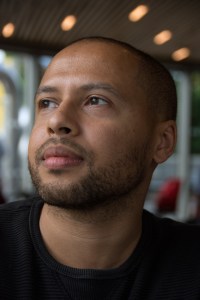
 

Dean Atta - credit Thomas Sammut
Dean Atta by Thomas Sammut

DA: I haven’t done yet but mostly because I haven’t fancied getting into drag for a 9am school assembly. It takes at least an hour to do my make up and I’m not really a morning person.

AH: Point taken! Are there any live dates/ performances coming up, in or out of drag?

DA: The Black Flamingo Cabaret at Kings Place, Wednesday 16th October 7.30pm with Travis Alabanza and Sea Sharp Book here.


The Stories We Tell YA Panel at Waterloo Library, Thursday 17th October 6pm with Alex Wheatle, Patrice Lawrence and Alexandra Sheppard Book here.

Being a Writer: Interactive Forum at Free Word, Wednesday 23rd October with Yomi Ṣode, Hannah Berry and Nathalie Teitler  Book here.

YA Lit Day at Southbank Centre, Saturday 26th October 4.30pm with Sara Barnard, Yasmin Rahman and Nikesh Shukla  Book here.

AH: Thank you Dean Atta. I’m really looking forward to your King’s Place show tomorrow – and many more beyond that.

You can buy The Black Flamingo here.

You can buy I Am Nobody’s Nigger here.

MOON POEMS FROM THE DARK SIDE – hearing the ‘less welcome’ poets Jenny Mitchell, Kostya Tsolákis, Emma Jeremy, SK Grout, Angus Strachan, Julie Irigaray, Appiah Sackey & Alice Hiller at The Harrison on 17/10/19 for Bloomsbury Festival

moon-poems-poster (1)

The Cambridge Dictionary defines democracy as “the belief in freedom and equality between people, or a system of government based on this belief.” To read those words, at a time when people of all beliefs are feeling unheard, generates a deep sense of longing – but also of possibility.

No matter the political circumstances, day by day, as individuals we retain the option to enact “freedom and equality” between ourselves. We can bring their energies  to the respect and consideration we show for each other. We can transmit them in the conversations we have, and the values we try and live by.   And we can record them in the art we make, and share, as our ‘hearing the less welcome’ poetry collective will be doing at The Harrison, in Harrison Street, London WC1 8JF, within the Bloomsbury Festival, from 7 pm on Thursday 17 October.

 Variously oriented, and gendered, and from around the world, our poets are committed to creative innovation and experimentation – and the realisation of beauty in multiple forms and voices. On and beyond the page, S.K Grout, Alice Hiller, Julie Irigaray, Emma Jeremy, Jenny Mitchell, Appiah Sackey, Angus Strachan and Kostya Tsolákis work though collaboration and witness to transform how our societies know themselves.

Humour, sensuality and playfulness alternate with radical, courageous exposure, to bring healing and understanding to difficult experiences, and injured places.   Our ‘dark side of the moon’ poems explore migration – forced and chosen – queerness, race, mental health, class privilege and exclusion, the inheritance of slavery, gender rebellion and sexual abuse in childhood, alongside the strength that community gives all of us working to bring change.

Ghana, Australia, Greece, the Basque country, France, the Caribbean, the UK and New Zealand are just some of the many countries that speak through our queer, and queer-allied works.   Tickets are free to maximise inclusivity. Booking is strongly recommended as our previous collective performance was sold out and standing room only.   We will be performing two sets either side of the interval with four poets per set. We warmly invite everyone to stay on afterwards in the hospitable Harrison – to play and share with us, in freedom and equality.

Reserve your FREE ticket for ‘Moon Poems from the Dark Side’ here.

Find out more about Jenny Mitchell and order her award-winning, debut collection Her Lost Language here.

Read an interview with Jenny Mitchell at the Wombwell Review here.

Find out more about Emma Jeremy and order her award-winning debut, Safety Behaviourhere.

Check out Kostya Tsolákis here.

Read poems by S.K. Grout here and here.

Poems by Alice Hiller can be found in the Poems section of this blog.  Scroll back for interviews with Romalyn Ante, Natalie Linh Bolderston and Karen Smith, who are all members of the ‘hearing the less welcome’ collective.   Also check out our previous, sold out MASS PUBLICATION CELEBRATION in this blog.

Warm thanks to poet, writer and film-maker Isabelle Baafi , and fellow member of our ‘hearing the less welcome’ collective for this beautiful poster.

moon-poems-poster (1)


‘I am a different person in one language than I am in another’: L.Kiew on combining Teo Chew, Hokkien and English in ‘The Unquiet’ – then rewriting privilege by letting words become ‘beasts that rub up against each other’.

Lisa poetry cafe

Identifiable in any gathering by her scarlet hair, L. Kiew is not a poet who seeks to conform. Her pamphlet, The Unquiet, was published by the prestigious independent publisher, Offord Road Books, earlier in 2019. A Chinese-Malaysian living in London, and working as an accountant, she is someone whose work I have loved for a number of years – for its originality, and willingness to take risks to arrive in new places, and open different ways of seeing and speaking. Over coffee in the Poetry Café in Covent Garden – ahead of a reading by her publisher Martha Sprackland – we spoke about her rebel great-grandmother refusing to have her feet bound, Chinese ghost stories, diaspora experiences, writing in multiple languages and dialects, arriving in England from Malaysia, and what feminism means outside of America and Europe. To give readers a sense of her multi-lingual poetry live, L. Kiew recorded three of her poems, which are available at the end of this interview, with more on her website.

AH: Your biog says that you’re an accountant and a dancer. Were you always a poet as well – and when did you start actually writing the poems down?

LK: I probably wouldn’t have thought of myself as a poet until my late teens. As a younger child I was happily writing little stories. In my late teens and early twenties I began to think a lot about language, and about the people I was speaking to, and about the challenges of communication. That is when I moved into poetry. I was very influenced by the more experimental work.

AH: Were there any poets who particularly inspired, encouraged or supported you?

LK: Very early I found Lisa Robertson. She was very very influential. I stumbled across Reality Street Press, so I was reading a lot of work from them. That really opened up things for me and made me think about language in quite a different way.

AH: When you are starting out, if you can find someone who is working in your area, it radically expands the field, and your sense of the possible. When it’s on the page, you can engage with it at your own pace. If you are taught in class, often it is being slightly pulled out of you – whereas sometimes you need to work more quietly.

LK: The curriculum was always quite conventional. The canon of English poetry. Obviously it is changing now. I read English at University.

AH: Likewise. Sylvia Plath was as close as we got to contemporary poetry.

LK: She was for me too. Sylvia Plath was quite a big influence on my work, as were a lot of the Imagist Poets.

AH: I really loved HD.

LK: That was a kind of beginning.

AH: Did you have any kind of mentors – or were you just writing on your own?

LK: Pretty much writing on my own. There was a writer in residence at the University. I saw her once. I felt very outside the thing that everyone else was doing so it didn’t really gel. All of my engagement was pretty much on the page.

AH: ‘Swallow’, the first poem in The Unquiet is about working within  a multi-tongued framework. You write about “overeating from the dictionary” and “nouns as sticky as langsat”, but also that “The words I swallow become/ feathers poking through my skin.” Would you say that language learning can be a form of migration in itself, separate from travel?

LK: Yes, because I think when you learn language, you move from one view of the world into another. It is about a change of state. I am a different person in one language than I am in another. Jennifer Lee Tsai write about this in her poem ‘Another Language’, published in Wild Court this year. It is a poem about being different in Cantonese and being in English and I feel that very much too.

AH: I grew up speaking French as well. Your thoughts take different shapes, reflecting the word containers that are available. I wondered if it was important for you to allow your readers to make this journey as well, into a different language, through the physically embodied textures and sounds of Malaysian dialect words with which your poems enact themselves?

LK: Language is a visceral thing – because it comes out of your body, and you experience it through the body as well. I wanted that to be in the writing. I also wanted that sense of when you walk down the street, and things are partially heard. For me, language is all about the lines between one kind of experience and another. I think of conversations and literature and your experience of reading as beasts that rub up against each other. You may rub a little longer some times than others. Sometimes you rub, and you move on. I wanted all of those to be possible in the experience of reading The Unquiet.

AH: When you read words that you don’t understand, you pronounce them in your head because you are trying to get the physical feel of them, to make an engagement. That is definitely a kind of rubbing that also opens your head to different sounds.

LK: I think you can engage in things in all sorts of different levels. One level doesn’t have to be privileged over another.

AH:     Absolutely. Would you be able to say a few words about your own childhood – because that is where your understanding of the world originated? You were born in Malaysia, where both your parents were scientists?

LK:     Yes, I grew up in Malaysia until I was 10. I came to the UK to boarding school – only going back in the school holidays. Both my parents are scientists. My mother is a botanist and my father is a zoologist. Nature plays a really big part in my writing as well, because of that experience.

AH: Once you started to come to England for boarding school, you were cutting between Malaysia and England, so you were having parallel but very different climates and landscapes?

LK:     Yes. In Malaysia, my parents would do field work at the weekend, so we often went on expeditions with them, when they were collecting locally. When my parents went on longer expeditions, we went too. My father ran a field study station for the University for many years, and we spent a lot of time there as children. People in Asia are very tolerant of children so the university students let us be underfoot. I had this wonderful experience – of playing there all the time.

AH: This was in the rainforest? With that density of sound and heat and visual stimuli?

LK: Whatever the students were studying, we were looking at too. We were alongside when they were trapping and collecting things in the rainforest. It was all very close.

AH:     It sounds really fantastic.  Like Natalie Linh Bolderston, whose pamphlet The Protection of Ghosts has just come out with V. Press, your poems occupy the voices of people from multiple generations. I’m thinking of Ląomà and Ah Jek in ‘Haunts,’ but also ‘Pitched in’ and ‘The Catch.’   Could you say something about those three poems?

LK: Some poems in the book are about ghost stories that I remember – family ghost stories. ‘Haunts’ is a series of ghost stories that I was told about people in the family. The Chinese love ghost stories. I really wanted to explore that because it’s not a genre that translates into English much. I was really wanting to write a whole series of ghost story poems.

‘Haunts’ is also about my great grandmother who came from China. I have been thinking a lot about her life, because she moved at a time of great transition. When you look back, she was an incredibly strong woman. For her time, she made very very difficult choices.   She chose not to have her feet bound and she came all the way across to Malaysia. Because her feet were not bound, she had to marry a much much older man. He died very early and then she had a whole brood of children that she needed to bring up. She was a very successful matriarch in that way – but also so incredibly tough.

AH: She would have had to be tough from the start to be able to resist foot binding at a young age?

LK: She had an iron will, I have to say. You have to admire those people who get through life with that strength when so many around them are, in a certain respect, powerless around certain things.

AH: What period did she come over to Malaysia?

LK: I don’t really know. Sometime between the turn of the century and before the second world war.

AH: There is real sorrow, and pain in ‘Pitched in’, which ends simply “dragging steps/ msa”msĭ/ the water is dark”. The words feel wrung from the speaker, but also flinty. You begin:

kangbāng covered in dust
a worn shirt on the line
with no one to fill it

Father at the door
I refused twelve
this was all that was left

kiaogià empty rice bowls
anguish springs like bamboo
on steep slopes

LK: ‘Pitched in’ covers choices about whom you marry.   I was thinking of my grandmother’s generation, where those choices were not great. ‘The Catch’ comes from a family story about my great grandmother and how she didn’t have sons until quite late, and she adopted one son.

AH: ‘The Catch’ has this wonderfully direct, but also swimming-with-feeling, emotional language. Its metaphors are viscerally embodied, and through this, inclusive of the reader. We get the mood of the poem, its love, combative-ness, and wounded-ness, because we can intuit them from the diction. I’m assuming ‘our little fish’ is her son? The poem in total reads:

When he brought that stinky parcel
of catfish home from the market,
Mother-in-law turned her eyes away
like swifts swimming across water.

My heart was an empty
house with its red door swinging wide.
I held our little fish
safe from the monsoon, the gossip

of storm clouds hurled and smashed papayas
against the shutters.
It’s impossible to wash the face of
our house clean.

LK: In Asia, it was quite common that if you don’t have a son of your own, and somebody else had an abundance of sons, then you would come to an arrangement. It is a rumoured in the family that is what she did, so one of my great uncles is apparently adopted. As with all family stories, only half of it comes down to the next generation.

AH: Children come into families in many ways. What matters is the welcome that they receive, rather than the door that they entered through.

LK: Yes, and in Chinese culture a son is very very important. A son is always treasured.

AH: I love all the physical textures in the poem. The “storm clouds” and the “smashed papayas” – and how they speak to a world of unarticulated, but deeply felt emotions around this tiny baby coming into the house from a different background. You’re making in your words a very different world to what some readers in London know – and making it very tangible and palpable. Having been born in Singapore, I really appreciate it. You register heat, and humid atmosphere. That level of physical detail makes different realities three dimensional – rather than saying one place is real and everywhere else is ‘on the map’.

LK: It’s very real for the characters in the poem. I wanted it to be the same for the readers.

AH: That really comes across. There’s also a strong strand of feminism which runs through The Unquiet, again spanning generations, and social classes.   ‘Francesca’ pays a beautiful tribute to a housekeeper “who walks to church/ daily, strong as bamboo// as persistent.”   Elizabeth Bishop also wrote about women in positions of service, and more recently the film Roma honours a woman obliged to take this role in her employer’s family. Was it important to you to give space to this area of working lives? You say also that she “makes sweet/ and sour pork better than anyone” and “tends/ the avocado tree, […] picks its fruit”.

LK: We privilege experience in different ways. I feel that work is equally valid regardless of where it is done. Everybody has a thing they do incredibly well, that is very valuable. I wanted to foreground that because it’s very easy, when you read from a position of education, to say ‘They weren’t educated. They didn’t have great options, so their lives must be less rich’. I don’t that is true. It is really important to show that all of these experiences are equally valid –regardless of their relative socio-economic position, regardless of the position that we read into it coming from the west and being educated, and with a certain reading of feminism as well. It is really interesting to be asked about feminism in relation to this because I read feminism as a western concept. I don’t think my great grandmother or Francesca would recognise it in the articulation that exists. They would say ‘well of course we do these things but there are constraints’. But you know you can get around these constraints. It’s just a different articulation.

AH: I think if you have Francesca’s role, you are a functioning economic unit and that gives you agency. Every being needs agency. Having a value put on your services gives you the ability to pay for food, to pay for housing, to educate your children. It’s a very powerful way of claiming your space as a human being.

LK: There were people who chose domestic work as a career path.   That’s not any different from any other career path you would choose. You know I would say Francesca, from the stories that she told me, chose it deliberately. It wasn’t that there were no other options. This is a path she deliberately chose.

AH: That was a real profession and a respected vocation. I just love that poem. It’s really beautiful and unapologetically celebratory. It really chimed with me.

LK: She is a marvellous and again, a very strong woman. Lots of strong women in my background.

AH: ‘Learning to be mixi’ is one of several poems which suggests that acquiring English language and culture can be a bruising, as well as enabling, experience, socially and personally.   You write:

I was buckled in, and taken off
to England, the boarding school
(not like Enid Blyton, not at all) and
Cambridge, the colleges,
the backs and the hate,
suppressing the suffix-lah,
being proper and nice, cutting
my tongue with that ice.

Could say something about this? It sounds as if you were not necessarily treated in the kindest way?

LK: England was a huge culture shock. I considered myself a speaker of English.   My mother was English. I didn’t perceive myself as being unfamiliar with the culture, having read English storybooks.   You have an expectation – then you arrive. It is so so different. As a child you just go through life. It happens to you.

AH: You live in your skin; you get on with it.

LK: It is only now that I am an adult, and have contemporaries with children at that age, that I look back and think that was actually quite a bruising culture shock. Behind this writing, there has been a lot of reflection – to do with reaching a certain point in my life and seeing other people’s children.

AH: The boarding school I went to very hierarchal and very prioritising of social class and conformity. My father was dead, and I was in a dormitory with girl whose mum was a single parent.   The third girl was from Northern Ireland. We felt marked as different.

LK: There were a lot of children who went home every weekend. The ones that were left behind at the weekend had our parents very very far away. It made a barrier.

AH: Certainly in the 70’s, when I was growing up, English people were not very tolerant of difference. There was a reluctance to allow people to integrate in the schools that I went to. Hopefully that is shifting now.

LK: Yeah, it has shifted a lot. Not everywhere to the same extent but there is certainly a lot more openness. Moving from England to Scotland was a really interesting dynamic. Scotland was very mono-cultural but with a very strong self-identifying of itself against English. As long as you were not English, you were in. It’s been interesting to move around the United Kingdom.

AH: ‘Speech’ begins “Ah Ba speak red: liddat tone/ of voice sure salah wan.” The poem goes on to enact a merging of dictions, and dictionaries, ending:

And I let my words landslide,
ferrous, carrying both stone chips,
rice and tapioca roots.
I dig down, ah, I speak lah,
pearl and pebble, new shoots.

Did this combining reflect an act of healing that has taken place within the pamphlet by bringing in so many different sorts of words?

LK:     As I wrote the pamphlet, I began to really embrace that movement across languages and through languages. Recognising it very much as the identity that I came from – because in Malaysia people are usually multilingual to varying degrees. That kind of dropping between languages is very common. Going to Malaysia with my partner was a lightbulb moment. I realised that shifting between languages within a sentence – something that I took as absolutely normal – was not something that everybody else experienced or practiced. I wanted to embrace that part of myself as I think in different languages. I grew up speaking different languages all simultaneously.

AH:     My father was half-French so I have French and English. I learnt Italian, and can follow Spanish, so I’m quite happy to shuffle languages. My Italian and my Spanish are not particularly good but but I can get by and listen to radio or tv in all those languages. It gives you a different mindset.

LK:     In England people tend to view a language like EU customs tracks. You are put into lines, but life is not like that. There is a lot of movement with the writing across languages. It is much more common than it used to be, and also in more of the poetry coming out of America, with writers who grow up with additional languages.

AH: Although you don’t give translations, because the words that you use are phonetically spelt, rather than written in ‘Chinese’ characters, and can be sounded out, I didn’t feel closed out as a reader. I could still get their sound quality. It didn’t feel that you were putting up icy walls that I couldn’t go across.

LK: I chose romanisation for The Unquiet because actually for me there is an interesting politics around the learning of characters, especially now when the only way to be able to learn them would be through Mandarin. And the primacy of Mandarin is a kind of construct that has come out of the rise of communism in China, and the development that they describe as Mandarin being the common language.   That wasn’t the case previously.  You can write all Chinese dialects in characters but when you do that, what tends to happen is that most readers will then attempt to read them as Mandarin, which they are not. I didn’t want that at all. I wanted to foreground the primacy of dialect in that space.

AH: Which is also functioning much of the time within the spoken space anyway?

LK: Yes. It is also about levels of literacy and levels of education which sit behind the text on the page. I am English educated, but I am not Chinese educated.

AH: You presumably hold the dialects primarily orally? As sounds in your head?

LK: For me, Teo Chew, Hokkien and other dialects were always oral languages. A lot of the older generation would never have completed school, so would read little or nothing. There is not much literature in dialect available outside of China and I’m not sure how much there is within China itself.

AH:     So in fact the ghost stories you re-tell are political, in that they are a form of family literature, and shared storytelling. They may not be written down but they are your heritage and a resource. When we have stories in common, or stories that echo each other – even when you said read Enid Blyton and I got it – there is bonding over those common imaginative currencies.

LK:     Yes, I think stories are common currencies across a lot of cultures. We all have a degree of archetype. They get changed according to the context – but there will be things that people recognise.

AH:     I felt it with the “red shantung” dress in ‘Haunts.’ ,

Ląomà believes the dead
cling to their possessions.
My dress is red shantung;
its last occupant is
heartbroken and tugging
on my hem.

The widower holds me
at arms’ length, cold and stiff.
I waltz around, around.
When I sink down, a white hand
strokes my feet, smearing black
blood over my cracked heels.

It is saying that clothes which pass between owners carry stories, but the dress is also the vessel in which you choose to pour a meaning, that is probably an archetypal, universal one – which each culture, and reader, will particularise. It is a story about past and present, and difficult relationships, and strange things, but also how we make, and find, images to understand our lives. On that note, would you like to say something about your decision not to give any translations, so the English language reader has to try to hear and feel the words they don’t understand, rather than simply dismissing them into meaning? Poetry has that ambiguity built into it. When you don’t translate a word – are you making it an extreme poetry moment?

LK:     The whole thing with poetry for me is the consciousness of language. I am foregrounding of it, and foregrounding the sound and the shape. For readers who can’t access the meaning automatically, they have to engage in it quite differently. I wanted those things not to be that smooth. I like your phrase ‘dismissing it into meaning’ because there is sometimes a tendency in how literature works that everything is made easy for the reader.   That is, easy for the educated reader.   So again there is a sort of dynamic of privilege that is in language. Choosing not to translate was partly about undermining. I want to privilege people who come from that multiple dialect background, and who can recognise some of it. I didn’t want to privilege the reader who has gone to Oxford and who has Latin and Greek but not any other languages. In their text, they might not translate classical Greek on the assumption that all the rest of us should understand. I wanted to shift that dynamic. We have Google translate these days and so actually it’s easy to find out.

AH: Yeah, I really loved it as it was. I think your realisation was a great triumph. Towards the end of The Unquiet, in ‘Cryptography’, you write about words which lie “like a forgotten cellar/ under the house of your childhood”. In ‘Lassaba’ there are “paper wings/ filling the hall with their shadows”. Whereas the earlier ghost poems called up histories in which there was suffering and cruelty, this seems like a more nourishing form of haunting – allowing the past also to be present in a sustaining way, and establishing a form of equilibrium. Does that seem fair?

LK:     The past is who you are, and you can’t change it. Those stories form who you are. It’s about reaching an equilibrium, because you have to acknowledge it, and take where you are, then grow from that soil.

AH: If you said to me cheese soufflé, I would straight away see the cheese soufflé in my French grandmother’s house, because that’s where I ate it. Whatever that word means to anybody else, to me it means a kitchen in Normandy, how we beat the eggs, grated the Gruyère, the way the spoon broke the crust when it was served. Soufflé is just a word – but it holds so much for me.

LK: And it informs all your future cheese soufflés doesn’t it?

AH: I made it when my elder son came home from university for the first time. It was a deep celebration. I wanted to reach back into the good part of my past and have it with us. On that subject, I know you were with Nina Mingya Powles and Natalie Linh Bolderston on a Bi’an retreat for writers of Chinese heritage. Nina tweeted that there was a lot of food talk. How was that as an experience?

LK: It was actually amazing; I have to say, completely, completely amazing to be in a diaspora group.

AH: Nina is New Zealand Chinese. Nat is Vietnamese Chinese English.

LK: It was amazing to meet people who come from different places in the diaspora, in different the waves of diaspora. The commonalities and the differences were extremely interesting. Those sorts of things are really enriching and so very fascinating – because it wasn’t just a retreat for poets. I only really interact with poets on the whole, so it was fascinating to meet people who write fiction, who do life writing, who write for the stage and who write for the cinema. It was a really broad experience. We did some fascinating workshops around translation – which was also really interesting. Working with a group of people with different language levels to read across languages in terms of translation was absolutely fascinating.

AH: Nat and Nina I know came back very happy.

LK: It was an amazing experience.

AH: Have you taken part in any writers’ activities in Malaysia? I know that Romalyn Ante has been really supported by a programme, which she won a place on in the Philippines, for Filipino writers. Did you ever participate in anything like that – or maybe there aren’t those kinds of programmes in Malaysia?

LK: Not that I’m aware of. Malaysia until fairly recently had a small publishing industry. So most Malaysian writers you would come across, Malaysian writers in English, tend to have come overseas and are published overseas first.

AH: Before we go down to hear Martha and Jean Sprackland read, can I ask, in conclusion, where are you headed next, creatively and geographically?

LK: Creatively I am working towards my full collection. I have been exploring the language that people use about the natural world, and what is a native species and what is non-native species. It is very much about belonging – but also drawing on that heritage that I have, from my parents’ scientific background.

AH: That sounds really good. Are you going back to Malaysia, working on this?

LK: I don’t go back that often – every three to five years or so. The more I thought about it, the more I realised lots of things migrate. If you look in your garden, and see where your plants originally came from, you suddenly discover that they are from all over.

AH: I have this ferocious yucca – which is definitely not from an English hedgerow.

LK: Lots of plants we think of as very common, or that have become very common like cyclamens, are not from here originally.   Cyclamens are from around the Mediterranean and down to Middle East. Tulips are as well. Lots of plants that we think of as native to the UK are naturalised. They weren’t originally from here.

AH:     That sounds like a perfect note to end on. Thank you very much, and thank you also for give us live readings of some of your multi-lingual poems, featuring Chinese dialects, Malay and English, which readers will be able to hear with these links.

‘Learning to be Mixi’

‘Cryptography’

‘Swallow’ recorded by Lunar Poetry podcasts.

You can buy ‘The Unquiet’ here.

L. Kiew will be performing at Rich Mix in London’s Bethnal Green on Saturday 13 July  – ‘with a sword on her head’.  More details here.

There’s also a link to L.K’s website with more information about publications and performances.   L. Kiew is shown with fellow poet and Westminster Library collaborator Joanna Ingham – whose debut pamphlet is due out with Ignition on 22 July.


Lisa and Joanna


‘I’m trying to write the stories not only of how my family suffered, but also how they survived’: Natalie Linh Bolderston on witnessing and healing in ‘The Protection of Ghosts’.

Natalie Linh Bolderston author photograph

@NatBolderston

Natalie Linh Bolderston has just published her brilliant, moving debut, The Protection of Ghosts, with V.Press, exploring life before, and after, her family’s departure from Vietnam as refugees in 1978 through three generations of women. The first time we met, I was struck by Natalie’s observant, centred quietness, and natural generosity. As I got to know her work, I came to understand how these qualities have been nourished by the multiple heritages which her poems honour. Together, in our conversation, we explored creativity, trauma, and healing – and the poets whose works have helped Natalie find her path. Still only in her mid twenties, while a student at Liverpool University, Natalie copy-edited Nuar Alsadir, under Pavilion’s internship programme, and was encouraged to develop her own poems by Deryn Rhys-Jones. Now working as an editor, Natalie Linh Bolderston has already been the Silver Winner for the Creative Future Writers’ Award 2018, come second in the Timothy Corsellis Prize 2018, been placed as a runner up in the Bi’an Award 2019 – and most recently won the Young Poets Network’s 2019 Golden Shovel Competition.   As key new voice in poetry, I’m honoured to be able to share Natalie Linh Bolderston’s first in-depth interview.

AH: Can I ask when and why you started experimenting with poetry? Were there any mentors, or teachers, who encouraged you, or was it more DIY?

NLB: In my second year at university, I took a creative writing class with Deryn Rees-Jones. I hadn’t written seriously before, and just wanted to see if I could. At the time, I didn’t know what form my writing would take, but I had mainly read fantasy and literary fiction by women. My experience of contemporary poetry was limited: in my previous education, a lot of emphasis had been placed on the canon – specifically the white, male, British canon – which didn’t resonate with me.

Early on, Deryn introduced us to the work of Mona Arshi and Sarah Howe. I felt an immediate connection to both poets: I loved the vibrancy of their images, their use of myth and narrative, and their explorations of family and cultural heritage. I was interested in contemplating family history, traditional stories, and cultural identity in my own work, and reading their poems made me feel more able to do so. As a young woman of colour, it meant so much to me to have two modern female writers of colour to look up to – and to know that there were so many more to discover.

Since my ideas seemed to come to me in intense moments, images, and fragmented lines, poetry felt like the right form to express them. Deryn was very encouraging from the beginning, as well as being very generous with feedback – I owe a lot to her.

AH: Were there any other writers who helped call forth your voice? I know you connect imaginatively with poets outside the UK.

NLB: My two ‘gateway’ poets were Mona Arshi and Sarah Howe. But once I started following poetry accounts on Twitter, I found so many other brilliant poets – the ones I return to most are probably Ocean Vuong, K Ming Chang, Warsan Shire and Romalyn Ante. All four write about migration, sense of place, cultural identity, family, trauma and survival in very different ways, and have made me think about how I can approach these themes and other difficult subject matter in my poems.

I’m also in awe of them from a technical perspective – I find their images particularly astonishing. For example, one of my favourites by Ocean Vuong is: ‘one spring / I crushed a monarch midflight / just to know how it felt / to have something change / in my hands’ (from ‘My Father Writes From Prison’). I love the eerie, tactile beauty, and the emotions captured in that one moment: namely isolation, aggression, and longing. Reading work like this showed me the beautiful and extraordinary possibilities of poetry, and encouraged me to keep going.

AH: How did it feel when you heard that V. Press had accepted your first pamphlet, The Protection of Ghosts, published on 23 April 2019?

NLB: It was a mix of disbelief, joy, and gratitude! As a young, emerging poet, I was prepared to wait many more years to get to the pamphlet stage, so I felt very fortunate and very grateful to V. Press (especially to Sarah Leavesley and Carrie Etter) for their belief in my work.

I was also excited for my poems to appear together, as a lot were written in conversation with each other and form a sort of fragmented arc. Gathering them into pamphlet form made me feel more able to provide a ‘fuller picture’, as the narrative threads that have been passed on to me by my family began to join.

AH: The poems in The Protection of Ghosts speak from your own position and generation, but also through your mother’s and grandmother’s voices.   They both lived in Vietnam until 1978. Did you always plan to have a chorus of mainly female voices speaking in and out of each other, ghosted by the past?

NLB: I don’t think it was a conscious plan at first, but when I started setting down my family’s stories the multiple voices came quite organically. Anything that I create is a collaborative effort, because so much of what I write is inspired by what my family have told me – particularly Mum and Bá Ngoại. I think that highlighting this through the chorus of voices enhances the emotional truth of what they have said, and gives me space to consider how I interact with that. For example, in ‘When Bá Ngoại tells stories’, I list quotes from her alongside my own interpretations and contemplations of these.

AH: How do your family feel about featuring in your work?

NLB: My mum is very supportive, and reads everything I write. She’s one of the first people who I send new poems to – so many stem from her stories, and I want to do them justice emotionally. A lot of poets mention having an ‘imagined reader’ when writing: for me, my mum is always the reader I have in mind. She’s told me that it moves her to see how much I’ve held on to her words and experiences over the years – she actually sent me a message about it, which I keep with me:

Untitled

Bá Ngoại is the same, although she sometimes needs help from me and Mum to fully understand my poems (my mum provides Vietnamese translations for some parts).

I’ve only recently felt brave enough to start showing my work to the rest of my family. The response has been very kind – like Mum, they’ve been interested to see how I’ve interpreted, interacted with and reproduced their stories.

AH: The opening poem, ‘I watch my mother peel longan fruits –’ is both a beginning, and an ending. It slides in a series of present tense scenes from your personal experience in England, to Saigon. On “a long-ago rooftop” for your mother “longans taste like sour rain/ and street dust.” The action then moves to leaving Vietnam: “The family drives through back roads // dark as the mouths of dogs.” You embed thought and memory into taste and texture so the reader also lives the experience.   Did recreating these scenes from the past also help you to inhabit them for yourself?

NLB: Yes – I think that poems like this help me get to know a version of my mother who I have never met: a young girl growing up in extraordinary circumstances, uncertain of her future. Starting with an image of food felt like a good way to conjure this part of her life, as tastes – and other sensory experiences – have a way of making the spectral very vivid.

I don’t hold these memories first hand, but do I have the fragments that my mother has shared with me over the years – memories of memories. Therefore, my piecing them together in my poems always feels like an act of ‘recreation’, rather than setting down verbatim fact. I think that that would be impossible. So poems like the one above are visualisations of the past: collaborations between my mother’s stories and my internal lens, with a shared emotional truth at their core.

Nat readingAH: The second poem, ‘Divinations on Survival’, uses the I-Ching form, devised by K Ming Chang. Each of the stanzas takes the form of an I-Ching hexagram, and can be read top to bottom, or bottom to top, always from left to right.   One of the images is of the speaker’s “body/ like a cooked fruit unravelling across the sea. in sagging boats.” It is a really powerful way of responding to the dislocations of exile, and forced migration. Did you experiment with any other forms first – or was it always going to be this one?

NLB: The poem came after the form. After I read K Ming Chang’s poem, I was first of all awestruck by what she had created with such imaginative self-imposed restraints, and by the very contemporary way in which she had honoured an old tradition (I-Ching is a Chinese method of divination). I then realised that the sense of enigma and fragmentation created by the form would work well as a way to express certain moments in my family’s history. The stanzas in ‘Divinations on Survival’ alternate between the voices of Bá Ngoại and my mother. They are moments of fear and uncertainty, when they had to put their faith in fate and their own courage in order to survive. I think the content also references the original basis of the form – divinations give a glimpse into the future, but the readings can be unclear and open to interpretation. Likewise, my poem depicts two women facing a precarious and unpredictable future, and trying to keep going long enough to see a better life.

AH: Did you grow up speaking Vietnamese as well as English? I think your family heritage is also partly Chinese?

NLB: I didn’t grow up bilingual, which is one of my biggest regrets. I treasure the fragments of Vietnamese that I do pick up from Mum and Bá Ngoại – my mum helps me record them, which is why they end up in my poems. I feel nourished by the sounds and conversations I grew up listening to, even if I didn’t understand them. My mum taught me a little bit when I was young, but she worked full time as a nurse so it was difficult. Now, I’m making more of a DIY effort to learn, which I think will be a lifelong process.

Ông Ngoại grew up in Xiamen in South China. He could speak Mandarin and Hokkien – as well as English and some French – and so can Bá Ngoại. Ông Ngoại died when I was very young, so I don’t have many memories of hearing him speak. But my mum has told me that he and Bá Ngoại mostly spoke Hokkien together. They didn’t teach my mum or her siblings any varieties of Chinese, so speaking Hokkien was their way of keeping things private.

 AH: Like many of your poems, ‘Divinations on Survival’ uses both Chinese characters, and transliterated Vietnamese words. You also had multi-lingual work published in the inaugural issue of harana poetry . Can you say something about using these linguistic markers to evidence your multiple cultural heritages?

NLB: When writing about things that my family have said in Vietnamese (or in a mix of Vietnamese and English), I never like to translate them fully – it would feel wrong, like leaving out an important part of who they are. Mum had to leave so much behind when she fled Vietnam, but she never forgot her Vietnamese. At family gatherings – and when Mum meets up with her Vietnamese friends – most of her conversations are held in her mother tongue. And that’s so beautiful to hear and witness, which is why I want to celebrate this multi-lingual environment in my poems.

Bá Ngoại can speak Mandarin and Hokkien (in addition to Vietnamese and English) but I hardly ever hear her speak any variety of Chinese while in the UK. When we visited Ông Ngoại’s side of the family in China, she spoke with them in Hokkien. She had not seen them for many years, but they were conversing and laughing so easily. It was like the revival of another self, which again was beautiful to see.

We’ve been finding out more and more about Ông Ngoại’s and his family’s life in China from letters and photographs, so this aspect of our family history has also started to feature in my poems. For example, one of my harana poems – ‘Photograph’ – is based on a picture of Ông Ngoại as a baby, sitting on his mother’s lap. It’s actually part of a sequence of poems I’ve been writing, exploring his mother’s life and his early life. This was a time before he learned Vietnamese or English or French, so it feels right to use Chinese linguistic markers when writing about this part of his history. Chinese was part of his identity, and I want to acknowledge and commemorate this.

AH: Your poems never shy away from recording the challenging experiences which your family went through in occupied Vietnam, and then travelling to the UK as refugees. They also acknowledge the lingering impact of trauma. But the people you describe are always presented with dignity and agency.   I’m thinking about your poem ‘Bá Ngoại’, about your grandmother, who teaches you to crochet, and “fastens gold” around your wrist. Could you say something about this resilience and life force?

NLB: When writing about trauma and resilience in my family, I keep in mind this quote from Ocean Vuong:

I’m trying to preserve the acts that made us possible. And so for a poet writing out of violence, it is on one point a moment of creation like the word poet from the Greek says, but also a point of preservation – you’re doing both at once. […] To honour their survival is to record it, and keep it from being obliterated.

This is something that has stayed with me, and helps me situate my writing. I’m also trying to write the stories not only of how my family suffered, but also how they survived. I want to record what they overcame to make a better life possible – for both themselves and the next generation of children.

I think intimate moments like the one you mention show the shadows of that survival instinct: my family’s impulse to pass on their knowledge, beliefs, traditions and heirlooms (physical or otherwise) to the next generation. By doing that, they pass on something of themselves: their strength and history. In ‘Bá Ngoại’, the gold bracelet holds a lot of memories – in Vietnam, my grandparents once owned a jewellery business, and Bá Ngoại was able to make chains herself. So it felt as if she was symbolically sharing that aspect of her past with me.

AH: Buddhist practices, along with the rituals to celebrate key festivals, and the offerings made on the family shrine at different times, are all lovingly recorded. Do they feel like places of strength for you?

NLB: Yes – I would say our shrines are places of strength, preservation, peace and comfort. I was thinking about them a lot when choosing the title for my pamphlet. When we pray, we are asking for the protection of ghosts – that is, guidance and protection from our ancestors. However, by keeping their stories, traditions and rituals alive, we are also protecting those ghosts by preserving and honouring their memory.

The shrines are also places of unity and celebration – some of my earliest memories are of my family coming together and leaving food at the shrine in Bá Ngoại’s house for Lunar New Year or Ông Ngoại’s remembrance day. Those are always special and loving times.

AH: ‘Typhoon in Xiamen’ and ‘Hạ Long Bay’ both refer to a visit you made with your family members to Vietnam and China a couple of years ago, which I believe was your mother’s first visit back since 1978. Would you like to say something about the experience of that trip, for you, and for her?

NLB: We visited Vietnam for the first time in 2014. For me, it was strange and wonderful to finally experience a place that I’ve held in my head for so long. Of course, it has changed so much since my mum left, but I could see shadows of her stories in the streets, markets, cafés, and food. It was also lovely to finally meet the members of my family who stayed in Saigon – they were so kind and welcoming.

For my mum, there were a lot of feelings. Mostly, she was so happy to spend time with extended family who she hadn’t seen for thirty years, and to meet the new generation. However, she was also a little sad – she didn’t feel like she belonged there anymore. In many ways, Vietnam isn’t the same place she remembers: she told me that it sometimes felt like her life there had been erased, or like it had never existed at all.

We visited my grandparents’ old jewellery shop in Bạc Liêu, which was a bittersweet experience for Mum. It was still a jewellery shop, but it had new owners – they turned out to be the people who used to live a few doors away from her, on the same street. They were friendly, and actually remembered my grandmother. Mum was happy to see that the place had been taken care of after so long, but I think it was hard to return to a place where she made so many memories, and where her life changed so suddenly and irrevocably.

We visited China (Beijing and then Xiamen) in 2016. That was a very new experience for both of us. Again, it was wonderful to meet more family, and find out a little more about my grandfather’s early life there. Xiamen has never been a physical home for me or my mum, but it did feel a little like an ancestral home – especially when we visited one of the family shrines, and the mausoleum where my great-grandmother’s ashes are kept. We burned joss paper in a barrel and prayed for her and my grandfather.  

AH: The way you describe it in ‘Ha Long Bay’ suggests Vietnam woke something new in your own voice? You write:

 Mangroves lean in,
knotted to the rockface
with swollen roots –

their rings, I think,
as many as our fingerprints.
A black kite springs alive
from the mist,
its call in my throat.

NLB: The details I included in ‘Hạ Long Bay’ give voice to my astonishment – it is a very beautiful and peaceful place. However, I think that there is also a sense of distance there. It was my first trip to Vietnam, and I was very aware that I was there as visitor rather than a former resident. So, in a way, everything was unfamiliar and astonishing to me. Despite that, it is still a place I feel deeply connected to. That’s why I tried to allude to the relationship between place and identity by linking the landscape to our bodies, as shown in the lines you mentioned.

 H Long Bay is also a site of historical violence: during the Vietnam War, the US Navy placed mines in many areas between the islands. So I also wanted to allude to the lingering presence of that violence beneath the beauty, with lines like: ‘Children wave / from wicker coracles / like upturned shields.’

AH: ‘Operation Ranch Hand’ won the Silver Award in the 2018 Creative Futures competition, and is named for the codename “for a chemical warfare campaign carried out by the US in the Vietnam War” according to the note below the title. It begins:

And just like that, the trees fold around them.
Gas snarls at a woman’s shoulders,
presses her belly to dirt.

She does not know about the scar
that is forming inside, that her daughter
will be born wordless on a stretcher.
That she will carry the smell
of dead leaves on her skin,
her name already cremated.

I think that this poem steps out of your family’s direct history, into the wider experience of the war, and I wondered how you researched it, and the impact on you of doing so?

IMG_0348NLB: When reading about Operation Ranch Hand, I concentrated on civilian accounts – from both victims and witnesses. I think that the methods behind military atrocities are often designed to feel very removed or distant, so that it’s easier for the perpetrators not to hold themselves accountable. So I wanted to show the painful impact of this particular cruelty by removing that distance and focusing in on one life. Even now, it’s hard to know the full extent of the damage caused by the US’ chemical weapons in Vietnam, but the health effects include death by agent orange poisoning, birth defects, and various cancers. Stories like this can be harrowing to read, but I think it’s very important to acknowledge that this happened, confront the impact, and not to forget the harm and destruction that chemical weapons cause.

AH: ‘Triệu Thị Trinh, or the Lady General Clad in Golden Robe’ and ‘Jingwei’ are two poems which both speak through legendary and mythical women.   Did you find that this opened a new dimension for you within your work?

NLB: Yes: I’ve become interested in poetic ‘resurrection’ – researching and amplifying the voices of historical, legendary and mythical women from Vietnam and China. In this way, I want to find my own wider lineage of women to look up to, as well as those in my family.

In the cases of Triệu Thị Trinh and Jingwei, I was interested in the multiplicity of their identities. A lot of the accounts of Triệu Thị Trinh focus on her as a military leader, and as a woman who was desirable to men. But I wanted to get to know her other selves: her identity as an orphan, as a girl coming of age under extreme conditions, and as a protector of other women. So while my poem does depict her legendary battle persona, I also tried to show a layer of vulnerability, expressed through her sorrow over the absence of her mother. I’ve since decided that I would like to write a sequence of poems about her. I’ve already written the next poem, which focuses on a particular coming-of-age moment: her period. The third poem is as yet unwritten, but I’d like this to detail her visits to the graves of and shrines to women who were lost in the war she fought, and the conflicting emotions attached to this.

In Chinese mythology, Jingwei is a bird reborn from the Emperor’s daughter, who drowned in the Eastern Sea. In my poem about her, I wanted to zero in on the process of transformation – the phasing of one self into another – and the sense of loss and estrangement associated with this. I think that I’d also like to return to her story in the future.

AH: ‘My mother’s nightmares’ begins describing how they “taste like seawater and vomit, handfuls of spat blood. The sky is a paper/ bruise, and it is always 1978.” The poem is in three sections. The second is the daughter’s dreams – “There is a garden where her skin is drying on the line.” The third draws mother and daughter together – “We both know there are some things we can only/ consider with our eyes closed.” Was it important for you to explore, and record, how trauma can speak through generations, even within the context of the very warm, and nurturing, connection between yourself and your mother, which shades so many of these poems with a movingly deep love, and tenderness?

NLB: Yes: I think that in this poem, I wanted to show one of the many ways in which my mother has taught me how to love. Although my mother has always been a figure of strength in my life, one of the ways we express our love and trust is through our mutual willingness to share our vulnerabilities with each other – and her willingness to share even the most painful aspects of her past. I think that trauma can manifest in very intimate moments, when you are allowing yourself to be most open. That’s probably why these recollections sometimes come at times of particular closeness, like the one described in the poem.

More generally, I also think that the stories my mother tells me are testaments to the strength and solace of familial love: it is her family’s love for and their determination to protect each other that kept them going through impossible circumstances.

AH: ‘Reflection’ is another poem which enters difficult spaces, describing a time when your mother apparently revolted against her own body while still in Vietnam by trying to stop eating, and then later sought to rub out visual traces of herself in you:

Asks if I remembered to pinch

my nose that morning,
as if I could exile her
from my face.

It suggests that one of the after-effects of trauma can be to alienate people from themselves, and their own bodies. I wondered if that was something which you wanted to draw attention to?

NLB: Yes: when my mum told me the story, it seemed like an expression of pain at a time when she felt voiceless. When your voice starts to disappear, I think that there’s an impulse to attempt to make the rest of your body disappear too. I wanted to show that feeling of powerlessness and isolation can manifest in the silence.

In the section you mention, I was contemplating the effects of intergenerational trauma, and how that feeling of self-alienation can be passed on. It was as if my mum thought that I’d be better off if I looked less like her – that I wouldn’t experience the same level of estrangement from my body if I could somehow assimilate with exclusionary western beauty standards. But of course there was no way to truly erase our internal and external similarities, and I’m grateful for that. She has always been someone who I look up to for her strength and kindness, and who I seek to emulate. I allude to this in the final line of the poem, when I ‘begin to stitch her skin over mine.’

AH: Questions for My Mother’ identifies the racism which she faced within her nursing career in the UK on occasion, but also the danger which originally “chased” the family from Vietnam, after first “lining their clothes with the family gold” to travel. You draw together both the lack of choice which makes people refugees, alongside the hostility which their need for refuge can engender. Do you feel a sense of connection to the current generation of people obliged to flee their countries?

NLB: I think that everyone should: it’s a matter of empathy and compassion. Unfortunately, a lot of people fail to extend that. Everyone’s story is different, but I do see some parallels between my mother’s experiences of coming to the UK and the experiences of refugees now, especially in terms of the way they are treated as ‘other’.

My mum was generally expected to take this racist treatment in silence – especially in her profession – and in this poem I wanted to break that silence. I used multiple scenarios to emphasise that such acts of discrimination are not isolated incidents – they are incessant and exhausting. They make your everyday environment a more dangerous and terrifying place, and solidify the feeling that you don’t belong.

I know that this is the reality for so many current refugees – both in everyday interactions and at a governmental level. I think it’s important to listen to their stories and to think about what it’s like to be forced into that position. Warsan Shire bears witness to this kind of trauma in much of her work – for example, in her poem ‘Conversations About Home (at the Deportation Centre)’ – which I find so powerful.

 AH: The final poem, ‘Aubade’, is a healing dawn song, addressed to your grandmother. It shows her surrounded by her generations of children and grandchildren, who have made full, loving, nurturing, valued lives in the UK.

Let your daughters cook stick rice, egg rolls, soup,
thirteen cups of jasmine.   Notice how they look less alike these days:

some lipsticked, grey-flecked, others ageless. See the chrysanthemums,
lilies, wild roses awaken at their silk shirts, the gold peeking

from beneath their sleeves.

The Asian American ceramicist and writer, Jade Snow Wong, made food one of the symbols of her creative, cultural and intellectual identities, writing in America in 1950, and I wondered if it was similarly resonant for you?

NLB: Yes – I think that food is so central to ceremony, unity and nourishment across generations. When we leave food at the shrine, we are inviting ancestors – both distant and recent – to share in our celebrations. It’s a way of remembering who we are, and honouring who came before us.

‘Aubade’ is about my grandfather’s death anniversary, which we observe every year – so in this poem it is mainly his memory that is being honoured. The anaphora was intended to sound both prayer-like and ritualistic. Grief can be a chaotic and disorienting experience, so I think that some comfort can be found in following set ceremonial practices. Ritual restores some measure of order, if only for a short period of time. Preparing and sharing food is part of this: it’s a practical, necessary task that you can get on with when you don’t know what else to do or say. In this poem, it felt like a very active way of processing loss.

Food is also tied to love. My mum is very openly affectionate anyway, but one of the ways in which she expresses her love is by constantly checking if I’m hungry, if I’ve eaten enough, if I’m eating well. It’s the same throughout my family – I allude to this towards the end of ‘Aubade’, when Bà Ngoại is being encouraged to eat: ‘Surrender to a bowl, / a fork.’ I think of this as my family’s way of strengthening and restoring each other.

AH: You have recently spent a week on an Arvon retreat with Bi’an, the UK Chinese Writers’ Network. How was that as an experience?

NLB: It was lovely and inspiring to meet so many Chinese-heritage writers creating work across so many genres. It felt like a very warm and supportive community, and the tutors – Jeremy Tiang and Yan Ge – were very inclusive and encouraging. Jeremy held a poetry translation workshop, where we translated an old Chinese poem as a group – Jeremy provided the literal translation, and we came up with variations on this. It was a great experience – I hadn’t considered trying translations before, but now I’d like to try translating some Vietnamese poems with my mum.

We were also fortunate enough to have Sarah Howe there as a guest tutor for one evening. It was wonderful to have the opportunity to watch her read and to chat to her afterwards – I told her that she was one of the first poets who made me want to write.

AH: Have you made any contacts with contemporary Vietnamese or Chinese poets outside of the UK?

NLB: I managed to meet Ocean Vuong at his Forward Prizes reading in 2017, which was a very special moment for me. I don’t think I’ve met any others personally, but I follow and have briefly interacted with several on Twitter. These include Đỗ Nguyên Mai and Cathy Linh Che, both of whom I admire very much. In an interview, Đỗ Nguyên Mai said that many of her literary heroines are ancient Vietnamese female writers and political figures. I love how this manifests in her work, especially in her poem ‘From Phùng Thị Chính to Her Child’.

AH: Where to next? I know that as I write these questions, you’re currently travelling in Vietnam again?   Is this somewhere you would like to spend a more extended period of time?

I think that my next creative destination will be an eventual full collection, but I think that this will be quite a gradual process. Poems come to me in lines, fragments, and images, which I then gather, edit and fit together. So I tend to write quite slowly.

I’m not sure what my next physical destination will be, but I’ll definitely go back to Vietnam and China at some point in the future. My April 2019 trip was my second visit to Vietnam. I tried to be more observant this time around – the first time, I think it was all so new to me that I struggled to take everything in. But this time I asked my family a lot of questions and made notes wherever I went, so I feel like I managed to learn even more about old stories, legends and traditions as well as our family history.

Because I didn’t grow up there, I don’t know if Vietnam would ever feel like home – although I know that we can have many kinds of home. I think of both Vietnam and China – specifically Bạc Liêu, Sóc Trăng, Saigon, and Xiamen – as ancestral homes, and so I’ll always feel very connected to both countries in that way.

Natalie Linh Bolderston’s ‘Middle Name with Diacritics’ came third in the National Poetry Competition, and is on the shortlist for best single poems in the 2021 Forwards Prize Awards.  You can read it here. 

The Protection of Ghosts can be ordered through V. Press here.

pamphlet pic

hearing the less welcome MASS PUBLICATION CELEBRATION No. 1: ‘a safe place to be completely unsafe’ Mary Devlin Powell.

IMG_2221If you’re new to ‘event promotion’, as I am, and stumbled into it by accident – a rainy Thursday evening, and a non-central London venue, look daunting. And I was daunted, setting out for Burley Fisher Books on the Overground, with an hour in hand, and my bag rustling with family packs of crisps, bought to sustain our poets and their audience.   But I didn’t need the spare pair of shoes, packed in the event of a sudden downpour. And the warmth with which I was greeted, and offered a barista coffee from behind the Burley Fisher counter, lifted my heart, and steadied my nerves.

Even before our 7.00 door time, people were piling steadily into the Hackney/Dalston booksellers.   Some I knew from our workshop, and others I didn’t. Each person through the door was a fist punch of joy – because they had come from all parts of London to join in our workshop’s first MASS PUBLICATION CELEBRATION, and to hear our ‘less welcome’ poets read from their debut pamphlets.

We ended up with so many people that we had to carry all the cafe seating downstairs, to supplement the event chairs. People still ended up ramming the basement venue to its back wall. What followed was extraordinary – fierce, warm, challenging, unafraid, readings, and energised, flowing discussions, right up until we had to leave at 9.30 when Burley Fisher needed to close.

To make a record of this extraordinary night, and share it with supporters who were not able to be there, I’m uploading what I said about our creative project, followed by the introductions for each of the poets who read, with a single poem from their set, to give you a flavour of their work, and a buy button for their pamphlet.

Below: Natalie Linh Bolderston and Edward Garvey Long, ready to go at Burley Fisher.


IMG_2222

A huge thank you to everyone here tonight – and to Burley Fisher for welcoming us so warmly to host our first MASS PUBLICATION CELEBRATION.   I’ll be introducing our poets individually – but I wanted to begin by saying something about our stanza workshop group, which has been running for 18 months now.

 Our tag is ‘the less welcome’. It relates directly to the difficult elements which our work engages with – and which we support each in realising, technically, editorially, and emotionally. We do this not for therapy – but because we want to get our poems into print –so we help can change how the world understands itself.

 If you write about your complex experiences of migration, or of class-based exclusion, there will be people within the dominant cultures who perceive that as an act of aggression. If you write about your queerness, religious and hetero-normative groupings will be quick to come back at you. If you write about mental health, sadness, or difficult family situations, many will suggest that it’s better to keep quiet. And if you write about your experience of sexual abuse in childhood – as I do – then work on your resilience. Because you’re going to need it.

 But these all ‘less welcome’ things have to be said – and, just as importantly, heard – as you are hearing us tonight. They have to be said because they are our lives. They also have to be said because the act of saying them, and claiming their rights to be represented, is beautiful and powerful, as we who stand before you to speak them in our own voices, and witness to them with our own beings, are beautiful, and powerful.

IMG_2229 Above : Audience piling in.


On that note, I am honoured to introduce Natalie Whittaker, who will also be reading with Julie Irigaray and I at the POETRY CAFE poem-a-thon on 18 May. Natalie is prize-winning poet, and secondary school English teacher, fresh back from reading at the Newcastle Poetry Festival. The poems in her debut pamphlet, Shadow Dogs, published by Ignition, grow out of South London’s tower blocks, bus routes and public parks, but move through them into a darkly witty, surreally symbolist, landscape – and much larger, wilder, stranger worlds.  

Natalie Whittaker has chosen ‘Not Again’ from her pamphlet Shadow Dogs published by Ignition Press. 

IMG_20181025_093211

Not again Natalie Whittaker

Buy ‘Shadow Dogs’ here.

IMG_2228

Above: Joanna Ingham and Isabelle Baafi

Isabelle Baafi, our next reader, is one of our many rising stars. A writer, poet and filmmaker, so far she has published in magazines, but her pamphlet and collection are only a matter of time. Isabelle’s part of the London Library’s Emerging Writers Programme. and recently performed at the Battersea Arts Centre. Taking beauty as their currency, Isabelle’s poems question what is done to, and said about, those who have no say in how they are treated and spoken of. Her poems give those people, and places, back their voices.

Fungi screenshot

Find out more about Isabelle Baafi’s work here.

Our third reader, Karen Smith, is another London girl, now living near the South Coast. A cataloguer at the Poetry Library, her pamphlet Schist was chosen by Carol Ann Duffy to be one of the final Laureate’s Choices, published in February by Smith Doorstop. Karen’s poems whirl us round fairground rides, and lose us in sea fogs, the better to understand the complex and fragile mental health of her parents, and its impact on herself and her sisters growing up. Karen’s poems also show what it means for radiance to enter our daily lives.

karen at soutbank


schist screen shot

There is also an interview with Karen Smith on this blog .

Here is the link to buy Karen Smith’s ‘Schist‘.


IMG_6161


The final poet of our first half, Edward Garvey Long, is launching his debut – The Living Museum – with Selcouth Station Press today.   On twitter, Ed fabulously describes himself as a “poet of queer feelings, gif queen, and crafty bitch.” His poems encounter queer love in London, the Fenlands, and Stockholm, negotiating tilted cathedral towers, and arctic chills. Probing the murky recesses of queer taxidermy, they also hang out with George Michael and Kenneth Williams. It goes without saying that you’re going to love them, and him….

The taxidermist screen shot

You can buy The Living Museum by Edward Garvey Longman here.

An editor by day, Natalie Linh Bolderston is our other poet launching tonight. Nat was asked to copy edit Nuar Alsadir’s Fourth Person Singular when an undergrad at Liverpool University, was a Silver Award winner at Creative Futures last year, and today brings us her stunning debut The Protection of Ghosts, from V.Press. Working with three generations of female voices, Nat looks back to Vietnam before her family were forced to flee as refugees in 1978, and questions who comes with us when we migrate countries, and cultures, how we are welcomed, and what we leave behind.

You can buy ‘The Protection of Ghosts’ by Natalie Linh Bolderston here.

Nat B

pamphlet pic


Joanna Ingham’s pamphlet Naming Bones, is coming out with Ignition in July, so she’s giving us a preview of the really wonderful, original poems it features. Like Isabelle, Joanna is a cross-genre artist, encompassing poetry and prose. Her work has been published in many magazines, including The Sunday Times. The poems she’ll be sharing question how we inhabit our bodies, what it means to know love – as a parent, as well as a lover – and why the the places through which we pass remain present within us.

Joanna screen shot

Joanna Ingham will be launching ‘Naming Bones’ at the Poetry Cafe in Betterton Street in London on 22 July at 7pm.   Book your free tickets here.


IMG_2224


Jeffery Sugarman with Natalie Whittaker before reading.

Our closing reader, Jeffery Sugarman, is launching his debut Dear Friend(s) with Emma Press tomorrow. One of this year’s Jerwood Arvon mentee’s, Jeffery came to writing through his practice of architecture. Dear Friend(s) maps the geographies of Jeffery’s life from a complex Florida childhood, to a queer coming of self in New York, and then London, where he now lives with his husband.   Through all the parts, runs the “long elegaic poem, ‘Dear Friend’, addressed to one young man, but a paean for all those lost to the genocide of AIDS.”

The Shepherd

You can buy ‘Dear Friend(s)  by Jeffery Sugarman here.

audience view

Alice Hiller introducing our MASS PUBLICATION CELEBRATION No. 1 at Burley Fisher Books.

Photos by Julie Irigaray, Mary Mulholland and Alice Hiller.

With thanks to everyone who joined us.

IMG_6199

Less welcome poets feeling warmly welcome.  Ed Garvey Longman is out of shot.

hearing the less welcome/ mass publication celebration no 1: live in London at Burley Fisher Books on 9/5/19 and at the Poetry Cafe on 18/5/19

mass_publication_celebration_1 (1)In these hard times, it can be tempting to pull back from what is strange. For poets, writers and artists, this may limit our parameters, and make it more difficult to connect with new audiences. To resist this narrowing, for the past eighteen months I’ve been facilitating a workshop for poets who address themes found to be less welcome or easy.

My poems respond to same-sex, sexual abuse in childhood, and its aftermath in adult life.   Others among our group explore migration, queerness, mental health, class privilege and exclusion, gender rebellion – and our beautiful, bodily beings.

Multi-national, complexly oriented, and variously aged, each of us is also a poet of witness. Political in our awareness, we are committed to creative innovation and experimentation – and the realisation of beauty in multiple forms and tongues. Because of its subject matters, our work can feel vulnerable and exposing in draft. To be part of a community of fellow poets, who have your back, is powerful – and necessary.

Our workshop, and its network of mutual nurture, came about when Paul McGrane offered the space above the Poetry Cafe in Betterton Street to anyone wanting to set up the Covent Garden Stanza group.   For me, that represented an opportunity to bring together individual poets that I had met through different classes, readings and workshops.

Within nine months, we had outgrown our first home, and moved to a free access public space. We operate a ‘yoghurt culture’ of co-creation and practice shared, collective promotion. Now that some of our poets are publishing their debut pamphlets, it seems logical to extend our conversation of difference into the public sphere, initially through two live events taking place in London this May – although we hope also to travel further afield.

On May 9, I will be hosting our free MASS PUBLICATION CELEBRATION NO. 1, at Burley Fisher Books between 7-9 pm. Edward Garvey-Long, Joanna Ingham, Natalie Linh Bolderston, Karen Smith, Jeffery Sugarman and Natalie Whittaker will be reading from their debut pamphlets, with a short ‘rising start’ slot from Isabelle Baafi, another of our poets. The link is here:

On 18 May, three of us will be performing within the Poetry Society poem-a-thon at the Poetry Cafe in Betterton Street, where we first met as a group. I’m on at 2.10, followed immediately by fellow poet Julie Irigaray at 2.20, with our third member, Natalie Whittaker on at 5.00. The event, which raises money to support the work of the Poetry Society, runs from midday until 10p.m, and features 60 amazing poets.

If you would like to donate to support work of the Poetry Society, Julie Irigaray, Natalie Whittaker and I are raising funds jointly under our Covent Garden Stanza group name. The link is here.

18 May at the Poetry Cafe in Betterton Street Poem-a-thon details here.

We would warmly welcome anyone free to join us on either 9 May at Burley Fisher Books, or 18 May at the Poetry Cafe in Betterton Street, to further our project of hearing the less welcome. Celebrate the powerful work being made by our poets – and be part of changing how people perceive the world we share.

mass_publication_celebration_1 (1)

From my 32 year old mouth, a terrified 8 year old whispered ‘Don’t make me’ : alice hiller on ‘saying the difficult thing’ in her work – and life.

Performing, and writing, generate anxiety. It is as inevitable as adrenaline. You worry if your work is original. Does it communicate? How will it will be received? For those of us who explore difficult material – there is also conflict. We fear, or have been warned off, distressing our audiences. But we also know, from personal experience, the greater dangers of remaining silent.

The recent launch of The Dizziness of Freedom by Bad Betty Press, brought this dilemma home to me. By virtue of their strength, elements within the material were difficult to bear. But the searing, fierce, sometimes painfully funny performances by poets from this anthology responding to mental health, resolved many of my concerns – through their ability to transform creatively a raw subject matter into work no one could ignore.

Dean Atta gave us depression in formal mourning clothes in ‘No Ascension’. Rachel Nwokoro made OCD the logical response to growing up queer, short-sighted, and female in a Nigerian/London household in ‘School Days’. And then it was Joelle Taylor’s turn to raise her hand above her head like a pistol – and proclaim an only half-laughing “trigger warning”. She told the audience, with absolute seriousness, if you feel the trigger, you hold the gun – and the power is yours.

Joelle Taylor’s blistering performance – of work about her own experience of having been raped as a child, and its aftermath – bore out her words. I was deeply impacted by hearing her, as someone who, like Joelle, was raped in childhood.   But I was also strengthened. And I jolted home on the train feeling so much less alone in the poems, and memoir, I am creating on this subject.

Joelle Taylor

When I write, or perform, poems about my own experiences of sexual abuse in childhood, I question my right to bear witness on a topic which people may feel disturbed by – no matter how much care I take to engender agency and safety within the work. From past experiences at live readings, and with contacts made through this blog and twitter, I know that there many of us out here. Either we have our own histories of sexual abuse in childhood, or we are connected to people who do, simply as a consequence of the widespread nature of this crime.

But I have found that it is this same group – my group –  who can be most relieved to hear, or read, my work. We discover within it forms of verbal and imagistic play which we recognise as making comprehensible an experience which is difficult to speak of, even in a private or therapeutic conversation.

While my poems appear simple, operating largely through layered imageries, and using direct, accessible language, it took more than a decade of creative experimentation in prose, then poetry, to find out how to write them. Before even getting going, I needed nearly a decade of psychotherapy to begin to able to articulate and resolve what had happened to me, and thereby gain enough separation from the sexual abuse to exercise a measure of creative agency.

I was already 32, with sons of 14 and 8, and researching a PhD at University College London, when I first met the psychotherapist to whom my GP referred me in order to discuss my troubled childhood and adolescence. I had recently discovered legal evidence of other harmful actions, which my abuser had taken concurrently to the abuse in the mid 1970s. This gave me the spur to open up a part of my earlier life which had always seemed too devastating to re-connect with.

I can still see that murky, grey November afternoon when I stood on a doorstep in Earls Court in London, feeling more numb than scared.   After a few moments, the grey-haired, soberly dressed therapist opened the front door of the apartment block to me, and led me up a dark stairwell, and along a narrow hallway, into her consulting room. Small, lined with books, it looked out onto the grey backs of other houses.

I had been confined to a similarly view-less room when hospitalised for anorexia aged 13.   That period of my life, during which I had first received psychiatric care, was one the psychotherapist asked me to discuss, along with the events that had caused me to stop eating as a teenager. I gave her a factual, slightly detached summary of my childhood, including my father’s death when I was eight, and our subsequent move from Brussels to Wiltshire in 1972.

And then she dropped the bomb. She said You’ll have to go back there.

From my 32 year old mouth, a terrified 8 year old whispered Don’t make me.

At that moment, with the light falling, and the darkness seeming to press its way in through the net curtains of the consulting room, a third person was present with us – ashamed, dirty, frightened, barely able to make a sound.

For twenty-four years I had kept this hurt child locked away inside me. Inaccessible, and silenced, her only medium of expression had been my regular, terrifying nightmares, which made me, and continues to make me on occasion, fearful of sleeping.

When our first session was up, I found my way down the stairs, and out onto the street. I was shocked – and deeply shaken. After I got home, time started to run in parallel. I was a mother, feeding my sons, asking them about their school day. I was also a cold, scared little girl, who wanted to curl up and lie absolutely still under heavy blankets.

That same night, I dreamt I was standing alone, in darkness, on the edge of a shingle beach. The stones shelved steeply down into navy blue water, the colour of a silk petticoat my abuser sometimes wore. With the pebbles sliding, and giving way, I stumbled forward into the sea. I was immediately out of my depth. All round me – dark, chilled water, and the pink-orange whiskery antennae of shrimp, touching my skin, entering my mouth, going between my teeth. I smelt a distinctive, fishy smell that I recognised from before.

The following week, with the psychotherapist’s support, I connected the dream with the textures, and colour, of my abuser’s slippery pubic hair, when I was forced to put my face in her aroused genital area. Our work of articulating my experience, and slowly, slowly, finding some degree of healing, was underway.

Many years later, I came to understand that the imagery within my poems could operate as a transmitter of meaning in the same way that the shrimp whiskers had. Back in 1996, the dreams simply intensified as we worked more deeply.  I continued the practice I had already evolved of writing them down, to separate them from myself, and gain some sense of control.

I was simultaneously trying to research and write up my funded PhD, be a partner to my husband, and raise our two sons as best I could. The dreams offered me a space to re-engage very deeply with my childhood experiences of sexual abuse, while also granting a degree of safety in the other parts of my life, where I needed to continue to function for the well-being of our family.  My poems now offer this for other people.

There was always a backlog of material, but I would print out two copies of each dream, and then bring them to my therapy session, so that the psychotherapist and I could respond to and interpret them together – in much the same way that I did the texts which I was writing about for my academic research. The difference was that the psychotherapist would then channel my responses to the imagery that my dreams had generated.

Although it was a slow and halting progress, which invariably left me devastated for several hours after each session, the dreams helped me locate feelings which I had not been able to experience at the time of the abuse because they were too dangerous. They also gave me a language in which to speak about the regular anal rapes, the implement used to effect them, and the emotional impact of living within the climate of secrecy, shame and fear both during the abuse, and afterwards as a teenager.

Heart-breakingly, as the psychotherapy was reaching a measure of resolution late in 2000, my husband Falcon was diagnosed with terminal cancer. For the next 14 months I cared for him full-time, in and out of hospital. After his death in 2002, my priority was to put life back together for our sons, then both in their teens.

Losing Falcon additionally led me to re-engage with the death of my own father when I was 8, which had been the precipitating factor for the penetrative phase of the sexual abuse. Through the Royal Free, I received further counselling. The more I took on board how much what had happened in my childhood had hurt me, the more I realised the need to try and change awareness around the crime of sexual abuse in childhood.

In 2007, once my younger son had left for university, I began to ask if I could find a way of articulating what had happened to me creatively, with all the personal risk this entailed. With younger my son away during term times, and his brother working outside London, I could afford to risk laying myself more open to my past. I was also fortunate to have formed a new, deeply supportive relationship, with the man who later became my second husband, which also helped sustain me.

My first attempt at writing took the form of a novel, which I worked on for seven years, while also working, and undergoing surgeries for ovarian cancer, diagnosed in 2011. The gynaecological surgeries had the effect of opening up more tissue memories of the abuse – a common response according to my surgeon. Although very difficult to bear, this extra layer of memory ultimately hardened my resolve to continue to agitate creatively for change.

Having always been a hungry reader, and previously been a features journalist, the novel initially seemed a good way to explore my story.  I could see its scenes, and hear its voices, and I valued the ability to tell a longer story, and show my narrator at multiple ages, alone and refracted through others.   But then as time went on, it began to feel as if I was working with thick gloves – speaking through a ‘character’.

I came to believe, for political, as well as personal reasons, that I needed to bear witness directly to my own experiences.  At the same time, as I wrote towards the novel’s climax, I found the scenes breaking themselves into shorter and shorter fragments, due to the power, and difficulty, of the material, and the need to contain and offset it within white space.

From here it was only a small step into poetry. Not knowing quite how to negotiate this new terrain, I signed up for Pascale Petit’s final workshop course at the Tate, in conjunction with the Marlene Dumas exhibition. Pascale’s encouragement, and that of poets on the course including Karen McCarthy Woolf, and Seraphima Kennedy, when I shared my draft work, told me that I had found where I needed to be – and set me on the path of developing my craft, and honing my voice as a poet.

I have since taken classes at The Poetry School, and Spread the Word, and was lucky to be awarded a year-long Jerwood Arvon mentorship with Pascale Petit, which also gave me the opportunity to collaborate on poems with fellow mentees Romalyn Ante, Seraphima Kennedy, Yvonne Reddick and Rachel Burns.

The poems may contain refractions of grooming, sexual abuse, and my troubled teenage years as a bisexual girl trying to find her identity after same-sex abuse – but I see them as jewelled musical boxes. They can be opened up, and allowed to play their harshly beautiful, sometimes shocking tunes – but they do so with all the resourcefulness and surprises of precise, beautifully made objects. When the song is done, and the tiny dancers have stopped revolving, the poem-boxes can then be closed down again until they are next needed, whether by myself, or another reader.

Although the materials at the poems’ hearts are given the resolutions of form and imagery, they nonetheless retain the danger, and terror of what happened to me as a child, which I re-experience every time I work on them. Without this, they could not do their work of speaking out on behalf of all those sexually abused as children – to help change how people perceive this global crime.