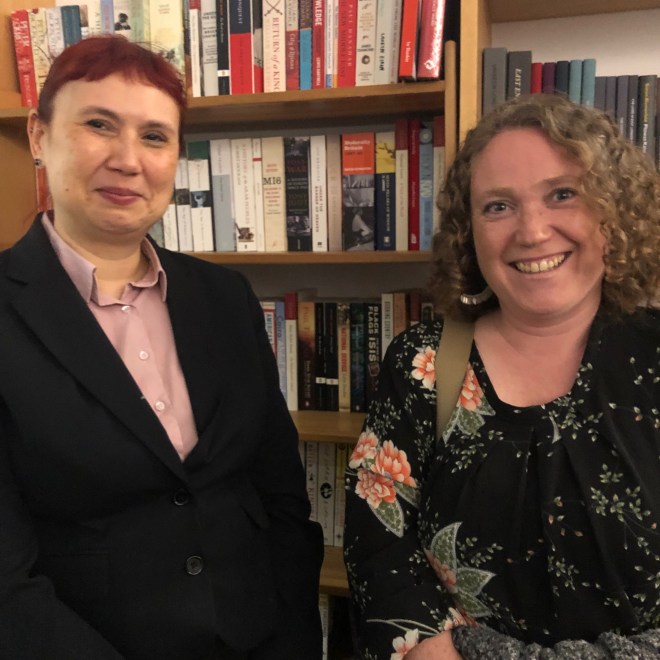
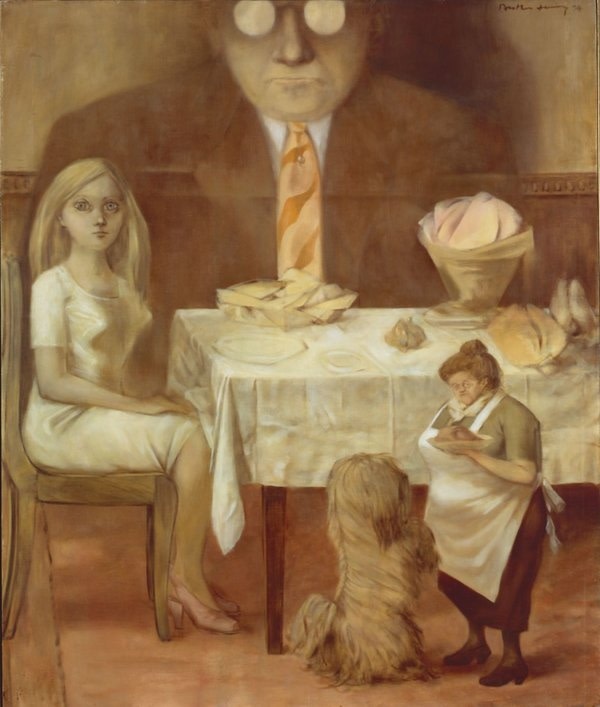
Traveller, writer, theatre-maker, and freestyler, Arji Manuelpillai is a poet whose work has always derived energy and resonance from its live components. While Mutton Rolls, his debut pamphlet from Out-Spoken, was launched online from his living room in lockdown, this in no way diminished audience numbers, or the warmth of their appreciation. Mutton Rolls’ poems find their subjects in UK raves and garage forecourt shops, but also on Sri Lankan beaches and in the aftermath of bombings and tsunamis. Like strobe lights flashing moments of visibility, they illuminate growing up in Britain with the double consciousness that derives from knowing your parents and family once lived somewhere else, and explore what it means not always to be made to feel welcome. Witty, joyous, and irreverent, the poems we talk about do not hesitate to call out the unacceptable. They can spin in a second to catch your heart – and hold it in a net of words that makes it beat differently when let go again.
AH: I’d like to start by asking you about your experience of the last few months Arji. You launched Mutton Rolls within the full UK lockdown. You also ran free poetry workshops with special guests on zoom which attracted huge attendances during the months when we were largely unable to meet in the physical world. How has this been for you?
AM: Such a pleasure to be here with you Alice and thanks so much for taking the time to chat to me. It has been a whirlwind few months. With so much of our collective futures turned upside down, I’ve found it difficult to manage my own expectations and keep the positivity up. However, in another way I have lived my whole life as a freelancer and with that sort of lifestyle comes an ability to adapt to the challenges with innovation and creativity. I can think of nothing worse than being furloughed at home being unable to work on new projects. So I was thankful for the opportunity to start Arji’s Poetry Jam, to continue with workshops with young people, help create a Refugee Week education resource for Kazzum Arts, and to plan and deliver a great release party for the pamphlet. It has been interesting as I feel like the online thing has provided people with greater accessibility in many ways. It creates a global playing field with fans for the workshops appearing in NZ, Finland, Canada and New York. It also made me feel like anything is possible with a little creativity. Right now, I’m spending a whole lot of time on Zoom but I’m really missing the real life groups, the community and the love of people connecting and creating together. I’m praying for the future, that we will return and still create wonderful work someday.
AH: I understand that. I feel the same way. It’s really fantastic that you have been able to continue to reach out and deliver to so many different groups against all the odds. People who want to find out more about these projects can check out the links on www.arji.org. Coming back to the current situation, you tweeted your uncle was one of the first doctors to die from COVID 19. The poem ‘after being called a paki’ confronts the racism which your father and his generation were met with on arrival in the UK. I wondered what it’s been like to publish a pamphlet which calls out UK racism past and present, and then have the #BlackLivesMatter movement rise up so powerfully here and round the world, speaking to and with so many of your themes?
AM: It has been so interesting to see how people respond to the poems about race. I’ve been surprised by some animosity towards poems like ‘white people’ and then I’ve had some really heartfelt messages from other South Asian people who connect with the work. I hadn’t really realised how important it was to speak to my community and capture those feelings until it was actually out there. This was highlighted by a good friend of mine who doesn’t ‘do poems’, (those are the people I really love to reach). He told me how he had never found the words to say how he felt growing up as a British Asian but now suddenly the book had captured them. I felt moved by that. As the BLM thing started to rise I was fully engrossed, angry, unsurprised, pretty much like most of the minority communities – but as it moved forward I started to unpack some of the racism within the South Asian community. I think we have to remember that the racism that black people feel in this country is unique to this country and the people within it. Black people deserve this space for discussion and the recognition of the racism they face and it is up to us all to face that head on and bring sustainable change. That’s not to say the South Asian experience isn’t important or valid. It is just accepting that the grouping together of races doesn’t help any of us. I am fortunate to have worked with inspiring black men and women and will continue to fight for change and equality. I believe that this is a movement of hope and change is possible if we are willing to keep trying.
AH: I absolutely agree with you, and I think your work is unquestionably part of that larger movement, and has been for many years. Calling into question the stability and integrity of contemporary identities, and the pressures to which people can be subjected, your opening poem, ‘credit card’, begins “someone pretended to be me/ filled my details out online”. The intercepted card is imagined/described as being used to facilitate an impeccably ‘middle class’ spending spree which includes “crème fraiche” for leek and potato soup, and ends up funding a seat at a shared table in a café “on the white side of Peckham” where the thief is supposed to have:
had a tea and carrot cake
read the paper, lent
back in their seat
so their hands fell to their sides
and the lady to the right
casual as breathing
pulled her handbag close
The only skin tone that is mentioned is “white”, but the “casual as breathing” action of the woman has the effect of putting the “someone” under suspicion for no reason that can be deduced from their tea drinking, paper reading or carrot cake eating. Would you be able to say something about the relationship between the speaking “me” and the observed “someone” in ‘credit card’, and why you chose to open Mutton Rolls with this poem?
AM: This poem is one of those poems that fell out of my head on a long walk. Someone actually did fraud my debit card and went to Morrisons and spent a small amount of money on groceries. I couldn’t get this idea out of my head, that someone was just hungry, no drugs, no alcohol, just hungry. All of those preconceived prejudice I had were thrown away. Almost in the same week I was in a theatre show, it was a play set in South Africa. In the middle of the piece I sat back in my seat and the lady beside me suddenly reached to her side, grabbed her bag and put it in her lap in the most awkward position. I sat there for 2 hours wanting to ask her why she had done that but I didn’t have the guts and it probably would have seemed over-the-top. As with many of my poems, it is the coming together of two contrasting ideas that gives birth to a real ‘charged’ feeling. So, let’s go back to the debit card thief. I started imagining a whole world for this thief, I created short vignettes of them all round town and the question kept coming up as to why they might have stolen the card. I was moving towards the ‘someone’ wanting to feel like they were part of the elitist class, like they could dine in the places the middle class dine but at the bottom of all that, they never truly belong. I combined that idea with the concept that no matter how well the thief works, he can never shake his class away. Hence the lady pulling her bag in at the end. I love that poem as it is all about wanting to belong and that’s the reason I put it at the opening of the pamphlet.
AH: Wanting to belong gets imagined in a different way in ‘brown boys in Kavos.’ The poem begins among a “tulip-topped spliffs” and “the backwash of cheap vodka” at “4am in a balmy Greek heat.” A hymn to the hedonism of “rumbling dance floors”, its heroes are “four brown corduroy-coloured boys” who are “failing to get laid/ in the ‘getting laid’ capital of Greece.” Their charms are coming off worse to “sweaty charisma and beautiful blackness” on the one hand, and “glitter soaked torsos/ all fearless and normal and slavemastery.” Against this temporarily disheartening outcome, their salvation, and reclamation of themselves comes in their solidarity, as the sun calls into life a new day:
brown boys think themselves ugly
but not yet ugly because they are brown
the sun is reaching over the rooftops
brown boys light cigs and laugh
an orgasm is caught in the breeze
I wondered if the idea of working collectively, and in concert with others, resonated with you, as part of a creative and transformative process?
AM: Everyone who knows me knows that I believe creativity is best enjoyed together. The camaraderie, the sharing of ideas, the spontaneity, I believe it is at the centre of a healthy mind and spirit. I have spent most of the last 15 years in participation arts because I truly believe making art together is integral to a happy society. In other parts of the world participatory arts is just art, by which I mean, everything is focussed around making art together. This is really true when we think about poetry. Poetry communities are integral to the scene, taking a poem to a group and sharing process is everything. Without it I really feel I would not be half the poet I am. This is one of the reasons why I feel there needs to be more mentorships for minority groups to encourage collaboration and connection. It is these communities that will nurture and grow Britain’s best new poems. Many publishers at the moment are asking for BAME poets to come forward but we need ‘quality’ – and to make ‘quality’ poets you need quality mentoring spread over long periods of time.
If you are interested in finding yourself a group perhaps start at The Poetry School where regular bursaries are available. Alternative options are Malika’s Kitchen and Covent Garden Stanza (run of course by you Alice). These are free groups but you will probably be asked to send samples. Loneliness is affecting us all at the moment so don’t sit in silence, connect with others and use art as a vehicle for transformation.
AH: Again, I can only agree. The Poetry Society co-ordinates Stanza groups up and down the UK, with further groups available in a few other countries, or with online membership. I’ll put details at the end of the interview. I know that the support of our stanza group really helped me personally during a very difficult few weeks in lockdown, It’s also been a fantastic place for me to try out new work in a safe place. Going back to Mutton Rolls, while ‘brown boys’ has a sunrise ending, ‘half catholic’ strikes a more sombre note. The first person speaker reveals himself to be a man who, while attracted to women, also responds to men with desire. As a woman who is drawn to both women, and men, this is a duality which I recognise. Reflecting how Catholicism can become a force which risks alienating people from themselves, the speaker remembers how:
at fifteen I touch a man in a way
that makes me wish God didn’t exist
throw up behind a Ford Fiesta
brush my teeth till the toothbrush snaps
“in Lourdes years later” he promises “not to want/ a man again” and prays for this to happen. Returning to the motif of theft, also present within ‘credit card’, the poem ends:
after the tsunami
I watch a man
pickpocket a corpse
quietly as though hiding it from the sky
The pickpocketing is presumably a matter of economic necessity, in order to ensure survival. I wondered if you could say something about why you chose to set those two narratives consecutively, and whether the reader was being asked to think about the historic thefts and appropriations of colonialism, and their enduring impacts through time?
AM: This poem is the coming together of a series of moments in my life. All of them are strung together through a feeling of humiliation and shame, a sense of not belonging and being unable to conform to a system that didn’t necessarily fit me both religiously, ideologically and spiritually. Landing in Sri Lanka during the Tsunami was one of the most pivotal moments of my life. It came at a time when I was turning to activism and God, observing the situation unravel was painful. I was amazed by the level of blind faith that many of the victims had, even after they had often lost their family, friends and livelihoods. Their faith gave them strength, it was something I envied but also something I ridiculed. This for me, connected the two parts of my upbringing. One side of me is always in awe of my heritage as a Sri Lankan Tamil, half Catholic and half Hindu. With that side comes all of the myths and stories and the rich cultural history of tradition and ritual. But the other British side was often disillusioned, faithless and sceptical of it all. That dichotomy is at the centre of the poem and a great deal of my work. I dabbled with the ending for a long, long time. Finally I came to this idea of a man stealing money while only caring about God watching. It seemed to connect to the British impact in Sri Lanka, it shows the power of capitalism and it also illustrates shame and it also connected with the desperation to survive.
AH: That’s an incredibly rich explanation Arji. It really captures how poems can hold multiplicities without forcing a single or simple resolution. Belinda Zhawi talked to me earlier in this series about the impacts of colonialism in Zimbabwe which was similarly powerful. There is an ongoing, and fruitful, tension in your work between narrating your experiences as a person, not least in several powerful break-up poems, and as a person of colour. Many writers are responding to this, not least the poet Cathy Park Hong in her study Minor Feelings, whose work speaks to many of us. ‘nominated for a BAME prize’ tackles this complexity head on, beginning “it’s always in capitals/ like someone is shouting it.” The speaker states “I feel almost unBAME// in my M&S shirt and trousers”, and seems to position the BAME branding as something which risks diminishing and ghettoising artists, and over-simplifying complex, nuanced narratives. Is that a fair reading?
AM: I think that is an extremely astute reading. I feel like BAME as a title has a truckload of problems associated with it. It boxes us all together, which dilutes the differentiation of culture between countries and religious groups. It gives people the perception that we are ‘all the same’ when in actual fact the continent of Asia is as diverse as you can get and Sri Lanka is a place made up of so many different minority groups. I totally sympathise with those that have tried to champion the representation of minorities in the arts but BAME is starting to feel a little dated. On top of this I’ve seen the term become quite divisive within the arts sector. Artists like me get a role or new project but it feels rather shadowed by the idea that ‘I only got it because I’m brown’. Often other artists may think me not deserving of the opportunity and that hurts. By segmenting us off, and doing call outs and competitions just for specific groups, it ends up feeling like we are in some way not applicable to the same rules of quality as our white counterparts. This is the opposite of what we as a society are trying to achieve. The funding and grant system in this country is creating divisions amongst artists, from those that do or don’t get funded, to those that can or can’t write an application form. Sometimes it feels like we spend so much of our time divided instead of innovating together.
I’m not sure what the answers are, but I believe the start is to have a universally clearer understanding of the differentiation between countries, cultures and traditions. When we begin to accept our own ignorance we will begin to move into a space where we are ready to grow and learn. This space is a position of true power.
AH: Undoubtedly your work is helping this transformation. The back cover of Mutton Rolls says you , like the speaker of ‘nominated for a BAME prize’, were “shortlisted for the Burning Eye BAME Pamphlet Prize 2018.” I wondered if I could ask you here something about the first person “I” of your poems? Do you see it as primarily specific, that is linking the work with you, Arji Manuelpillai, as a series of statements of witness? Or is it more a ‘first personal universal’, so that the I becomes a portal through which the reader can look with a greater degree of empathy and understanding? Or both?
AM: You are the first person to call this out. Yes, much as I love and respect Burning Eye, they did inspire that poem. After I was shortlisted I found it interesting how I didn’t tell my parents it was a BAME prize. I was almost embarrassed by it. So I create vehicles for the personal messages to travel through. I do feel like the work is reflective of where I was at during that time. I wanted it to be like a calling card for my style and voice. The voice is very much me, the situations (though not always completely true) are very much like me and I’m proud of that. I hope that they will provide a greater understanding and empathy from the reader but I also feel they are fragments of myself and not designed to lead or coax the reader into any set reaction. I think in the newer work I am creating I am more interested in the ‘I’ taking a back seat, perhaps even disappearing and allowing the reader space to walk around, wander and discover. I hope that doesn’t sound too over-the-top. I feel like my new work is going to discuss life in a whole new nuanced way and I’m super excited about it.
AH: I really look forward to those poems Arji. Many of your Mutton Rolls poems explore the emotional lives of men. ‘Cecilia says we’re all fucked up’ is an unpunctuated prose poem that explores the conversations between a psychotherapist and her client. There is a surface play of humour and irony, riffing on the neutral décor and demeanour of the therapist. This anodyne professional setting elicits the revelation “my friend died when I was 24 I never got to say goodbye.” After the apparently desultory meandering leading up to this, however, the closing lines have all the impact of being dropped down through a trap door
I was busy being strong that’s why abstract
paintings work so well she’s leaning back must be time wipe
the tears away like face paint how long before I’m wandering
drunk down the Old Kent Road not knowing how I got there
Could you say something about the poem’s ending, and what it means to you to find forms through which to speak of things which can’t easily be said, but are powerful forces within our lives?
AM: This poem was a real turning point to me. The Cecilia in the poem is actually Cecilia Knapp and the poem came out of a need to connect many opposing internal dialogues with the running dialogue with a therapist. After I finished it I took it to a feedback session and I literally wasn’t sure whether it was good or really rubbish. I think the poem began to unpack a need I have to move towards reflecting the way the mind moves without the need for set narrative. My favourite poets are doing this currently, the work of poets like Jericho Brown, Chen Chen and Morgan Parker have led the way in this, but poets like Wayne Holloway Smith and Emily Berry have paved the way in England too. I feel that this poem was the start of that hunger and movement. The final lines took a lot to muster, the balance was integral and it was discussed over many a cup of tea with Hannah Lowe, who helped me learn about the soft step off. She always says ‘go in hard and get off lightly’ (or something like that). Finding this form and flipping the camera upside down allows us to capture the intricacies of this complex world that we live in. During this answer I’ve name-dropped a bit. I am doing this because it is important to remember that these poems are the product of many discussions, feedback sessions and books by other poets.
AH: You mentioned Wayne Holloway-Smith in the roll call. I know you’ve taken workshops with him. Wayne is concerned to investigate and call out how the complexities of masculinities are represented, and to challenge cultural and class stereotyping. To what extent do you feel your work is in conversation with his poems?
AM: Wow, I never thought of it like that. I’d be honoured for people to even consider them in connection with Wayne’s work. He has been a real inspiration to me. His work unpicks so much about being a man and growing up but it also deals with emotions in an incomplete and broken linear. The real admiration I have for Wayne is his attitude to poetry itself. His mindset is settled around feeling, process and freedom, not necessarily making sense or clarity of narrative. He isn’t bothered whether things look or sound like a poem, he is just about how it makes an audience squeal or turn in their seat. He has taught me to be the sort of poet that doesn’t give a f-ck, to innovate, challenge preconception and industry notions of acceptance, to dig into process, to grow, discover, play with it all and take nothing for granted. Everything we read in the Monday night class we question, poke fun at, pick apart, no one is on a pedestal, everything isn’t about what’s happening but what is ‘working’. Some people say ‘oh it doesn’t seem much like a poem’ and that really doesn’t bother us, I want to make people think and Wayne has taught me that. Thematically, any connections between our work is simply because I have spent too many Monday nights in his group.
AH: I’m sure Wayne will be happy to read that. Your wonderful poem ‘regret’ was placed in last year’s Oxford Poetry Prize. It offers a vignette of “my mum chatting in Tamil to the boy at the petrol station counter.” Snatches of their conversation are represented in Tamil, and the mum is shown as being completely at ease and lost in this moment:
she is Aunty, he is Thamby
and the queue behind us can wait
The speaker, however, is excluded, catching only snatches of the conversation, “plucking subtitles from their eyebrows”. Yet it is from this sense of not-fitting that the poem’s voice and consciousness grow. I wondered if you would like to say something about the creative potential of dislocation and exclusion as a generative force for you as an artist, in this poem and more generally?
AM: I feel like not belonging drives the majority of my work. We spend most our years growing up hoping to fit into the system only to realise our uniqueness is what makes us special. In my workshops with young people I’m always encouraging people to think about their exclusion as a force of creativity. Ask yourself, what makes you unique, different and amazing. This poem is a very truthful representation of my mother and I in a petrol station. My Mum is an amazing conversationalist. Whenever we go anywhere she is talking to the cashier or catching up with someone in the queue. In England, India or Sri Lanka she’s always speaking to people and often I wish so much I could join in. I mastered the English language but perhaps in doing so sacrificed my Tamil heritage. This poem isn’t just about language though, it is also about the love I have for my Mum.
AH: Another important woman in your life has been the poet Hannah Lowe, who was your mentor on the Jerwood Arvon Scheme, and who, like so many of us, works from a place of cultural multiplicities. I was massively helped by having Pascale Petit as my mentor on the same scheme. Could you say something about your experience of being mentored by Hannah?
AM: Getting the Jerwood Arvon mentorship was probably one of the biggest achievements of my writing life. It provided me (and you too) with a community of artists, a space to create and a mentor who really believed in me. Hannah has been completely instrumental to my growth as a poet and artist. Her work transcends cultures and backgrounds, her control of narrative is second to none and her ability to mentor is truly masterful. Hannah is always focussed on clarity of image, constantly pushing me to make even the abstract hold true conceit and is always encouraging me to take the reader by the hand and lead them from line to line. This has been so influential to me. When I’m lost, I often see her on my shoulder asking ‘I don’t really get this bit’ or it’s not really clear enough’. She is also a poet who believes in accessibility of the work, so she pushed me to make sure the poems reached the readership I wanted to reach instead of tumbling into abstraction. In many ways Hannah and Wayne sit on opposite ends of a poetry spectrum. This was a wonderful thing to experience, it allowed me to see how poetry could pull and shift in different directions, it allowed me to ride a very thin line between being abstract and being very clear and it also showed me that finally my own choices had to be made. As Hannah once said to me ‘just be confident with what you’re trying to do’. Hannah’s passionate, down to earth, giving nature is something that I will always be thankful for.
AH: ‘after the Sri Lankan bombing that kills 360 (after the 20 year more than killed significantly more)’ uses the powers of miniaturisation deployed by Elizabeth Bishop in her poem ‘Brazil, January 1 1502’, and by Rachael Allen in her poem ‘Banshee’ – to name but two other poets of the tiny. Elizabeth Bishop is describing the rapist-conquistadors who are “hard as nails/ tiny as nails, and glinting, in creaking armour.” Rachael Allen (interviewed last year in this series) is reanimating the murder of a woman whose aggressor works “like a small model forester/ axing up plastic logs.”
Your poem begins “after the news my skin feels darker”, and uses responses to the bombing in the Grand Cinnamon Hotel as a prism to make more visible the complexities of only being “Sri Lankan / at weddings and funerals or for inquisitive white people”. The poem ends by distilling its contradictions into three singing lines:
from here (on the toilet) it’s all just a cluster of tiny red faces
wailing in a language I don’t understand in a country I can’t
oh look! that’s where Mama and Appa first met
I wanted to ask you to what extent the miniaturised space of the poem – which takes huge subjects and telescopes them down – creates a measure of safety for dealing with difficult or otherwise unmanageable materials?
AM: I think you’re really onto something there. I’m really interested in pulling big political constructs into my poems and sometimes that can be a very daunting thing. Finding methods to do this is tricky. I’ve found that keeping the subject of the poem down-to-earth and ‘local’ allows the overriding message to have its own open plain. In this poem it all centres around the speaker watching a video online yet the focus is bigger. All political problems have a microscopic impact on our lives, that means taking a subject like war and persecution and asking yourself where does that sit on a local level. This can be a very fruitful task and I feel it allows you an ability to not seem ‘over-the-top’ or ‘self-righteous’ which is always the problem of political poetry. I want to take risks and over the last year since the pamphlet has been released I have been researching political poets. Most of them from USA. Tracy K Smith creates letters charting the journey of black slaves from varying people in history. Patricia Smith tells the story through accounts from victims and family members of violence. These poets are a real inspiration to me, they take the human, local situations and show how they are the repercussions of larger political problems. I believe poetry needs to reflect our politics and begin to unpack some of the complexities of our political system. Often these systems seem too much to deal with, too complicated and too daunting but it is important we find ways to do it, it’s important we do not turn away, but instead create vehicles to promote discussion.
AH: I can relate to that, albeit in a slightly different field. As you know, in my current work I am trying to use my own direct experiences of being abused as a child to give witness to, and change awareness around, the global crime of the grooming and sexual abuse of children, and look at its aftermath for vulnerable teenagers. To make the poems, I have to find or open myself to imageries and forms that can hold the materials so they become accessible to, and safe for, the reader, notwithstanding their potentially very difficult subject matters.
More generally, poetry is about control, but it’s also about the reverse – abandoning and opening yourself to let complex things enact a form of authentic aesthetic identity in language. Could you say something about how, when, and where your poems come into being, and your process of working with them to their published forms? I know you also freestyle, where improvisation and being able to trust yourself and go with the energy, is a key?
AM: I am a true believer in play as a means to creation. I believe that being playful will allow us to open ourselves up and throw away the inner voice obsessed with judging our success. Freestyling is the epitome of this. A rapper freestyling is a magical, spontaneous force of creativity. For me, I freestyle best when I am relaxed, when the audience lack judgement, I can move into a space where my brain seems to work outside of itself, where I don’t think of the words, the words just fall together like bubbles pulling together in a bath. This feeling is as much about the people around me as it is about my presence in the moment. I believe that workshops and feedback groups should adopt this way of thinking. The workshops should initially focus on connecting people, creating a relaxed and free space full of love, while allowing people to express and discover themselves in a wholly present way. After this, the poems will simply flow naturally. I chase the feeling of freestyle when I am creating poems. I’m always looking for experiences that bring the playful from me, that pull me out of my usual surroundings and throw me into a space where I must be fully present. I’m all about the process, the feeling of building a poem like a house, and living in it, taking risks and pushing it to see how far it can go. In terms of practise, I try to wake up each day and put something into being. Anything, just accepting whatever comes out can be really rubbish or be the start of something really good. Recently I have read more as this has been a weakness for me.
AH: I wanted to ask about your brilliant final poem, ‘because it’s in the Lonely Planet top five places to visit’. The poem intercuts a couple telling the speaker about how the husband proposed “as the sun / licked the sea red and birds punched shrapnel in the sky”, on the sand outside their beach hut, with the speaker’s account (thought, not spoken within the live conversation) of the island’s recent bloody history, to which they appear oblivious or indifferent :
will you – I used to march to make change but
since then I march just to sleep at night that country
changed me she says the bars the sea-views biryani kothu roti
plus the people are so generous they don’t hassle like Indians
they’d drop a bomb wait five minutes drop another to
kill the rescue party they spent the whole evening staring
out to sea she says it’s their paradise they made a pact to
go back there every ten years to that bar in that country where
bombs rained into no fire zones where bodies are hidden sixty
to a hole it’s hard to put into words he says as their fingers
weave together it’s somewhere we could call our second
home the soldiers were spread across Tamil land few tried
for war crimes I don’t know why you don’t move back there
In your opening poem, ‘credit card’, identity is precarious, deniable, steal-able. Here the only two points at which the speaker uses the “I” pronoun come around his attempt to assert a contradictory narrative, as quoted above. The reader is given the sense of a narrative about Sri Lanka which is being repeatedly drowned out by the denials of history and blithe rewritings of the tourist industry. The final phrase first person phrase, spoken by one of the members of the couple, – “I don’t know why you don’t move back there” – is moreover one used by people challenging migrations globally. Would you be able to say something about this poem and its ending?
AM: The poem was originally built in a train in India. Remember when I talked about the local situation being used to talk about global issues? In this poem the local situation is a Californian couple. Yes, they did indeed speak in detail about how they loved Sri Lanka. I actually spent a little while explaining my mixed feelings about the place but it didn’t seem to faze them. The recent groom said ‘well you could say that about a lot of places’ and that message stuck with me. I wanted the poem to capture this conversation in a new way with multiple perspectives. To create a range of conversations happening simultaneously. That is the spoken words, the internal dialogue, as well as the dialogue to the reader. There is a line that I really battled with ‘I used to march to make change…’ that line is a clinical line for me as it is the speaker’s internal dialogue, it comes from a different place. The ending has gone through many different stages, it used to have more of a back and forth but I found that pulling it back left the reader on more of an edge and let the poem live on after the poem was finished. This is a real life situation for a lot of second generation migrants. There is conflict between our own feelings and those that go there, there is a conflict between the politics of oppressors and the politics of our supposed mother land. I attempted to capture this conflict in the use of this cut and splice form.
AH : It really works for me, Arji. Can I end by asking where to next? What are your plans for 2020, and beyond?
AM: I’ve been really productive since lockdown from writing to workshopping and I’m looking forward to an August break in Wales. I’m also about to become writer in residence for a pub in Dorset where I will be writing a series of poems in conjunction with local patrons of the pub. I’m also currently commissioned by Stockton Council to write 40 poems for isolated people across the North East so I’ve been writing poems and ringing people up out the blue to share them. I love that so much.
In terms of poetry I want to be pushing my process and work as far as it can go. I feel like I’m only just reaching my stride and I have a whole lot left to give. I am really excited about the new work I’m writing connected to race and hate crime. I’m messing with the ‘i’, writing from a range of perspectives and most importantly, still enjoying it. It’s a risky, deep vat of possibilities so at the exciting part of the process. I want to be more political in my poems and create work for those without a voice. I want to push the boundaries of what we can say and how we say it with regards to race, it’s a dicey game but also very exciting. There’s a lot to keep an eye out for, you can follow me at @theleano, or Arji Manuelpillai on insta or you can join the mailing list at www.arji.org. Thank you so much for having me on here Alice, you are an inspiration to so many of us poets.
AH: Thank you so much for such an amazing set of answers Arji. As always with these interviews around the idea of ‘saying the difficult thing’, I feel I have gained so much by being given an insight into to the workings behind your poems. I’m really excited for your new work and so happy to have had the chance to share the poems in Mutton Rolls with our readers.
Mutton Rolls can be bought here from Out-Spoken’s website for £7.00..
If you want to find out more about joining a Poetry Society Stanza workshop group to develop your poems and connect with other poets details are here at the Poetry Society’s website.
For details of Arji’s ongoing creative adventures, including films he’s made, and performance collaborations, sign up to his mailing list at www.arji.org .
To check in with Arji’s Pickle Jar podcast, where he checks in with poets making and chatting, click here.

 Troy Cabida is the first poet I have had the privilege of interviewing about ‘saying the difficult thing’ in their work during lockdown, and the second librarian poet in this spot, following on from Karen Smith last year. Troy tuned into poetry while still at school (further details below) and has shared with us a live recording of his poem ‘In Conversation with Past Troy’ to a backing track by Gabriel Jones of Bump Kin, from which the title quote is taken. If you want to carry Troy’s live voice in your ears alongside our conversation about War Dove, Troy’s debut with Bad Betty Press, published on 2 May 2020, click on the link
  Widely published in Bukambibig, harana, TAYO Literary, Ink, Sweat and Tears, Cha: An Asian Literary Journal, and Macmillan, Troy was a member of two legendary London co-operatives, the Barbican Young Poets, and Roundhouse Poetry Collective, which previously nurtured Belinda Zhawi and Dean Atta, amongst other distinguished poets. Belinda’s and Dean’s interviews also feature in this series and tutor and poet Rachel Long’s is also available.

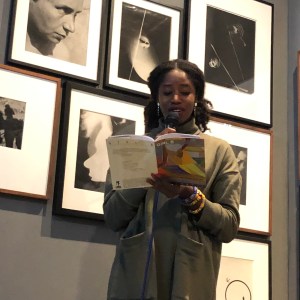

 opposites: where the first stanza focuses on a dominant and physical figure, the second stanza is about the more pensive counterpart. Having both stanzas hold six lines each, to me, meant that they were still standing on equal grounds even though they were different. In a normal situation, the “fist bouncing from chest” would have resulted in pain and then a cue to retreat, but in this instance, this clash becomes a gateway into a deeper relationship, where you can see “flickers of your eyes from mine to the ground”, and then the two personalities mix and learn from one another.
 A child of the upper Midwest, and descendent of Norwegian farming stock, Linda Gregerson is a poet of winter, able to bring snow, and the lives shaped by its rigours, to the page. She is also a poet of time – and of the bodily selves in which our identities are vested. Awarded fellowships from the Guggenheim Foundation and the National Endowment for the Arts, amongst other distinguished accolades, she came to writing poetry through renaissance studies, and theatre making. We met last summer, under the plane trees of Russell Square in Bloomsbury, to discuss Prodigal, her collection of new and selected poems from 1976 to 2014. Gregerson was over from University of Michigan where she teaches, and has previously directed the MFA Program. Our conversation explored how Gregerson came to enter the worlds of ‘high’ culture, and academia, and claim herself creatively, while also remaining connected with the more visceral and direct voices of her upbringing. I asked her about the challenges of giving witness to the violent murder of a close friend, and exploring the sustained childhood sexual abuse of her own sister – without exploiting or diminishing these two women. We discussed how her poems work with contemporary scientific research, and what it can mean, as a woman, to write about blood. We also talked about writing towards lost fathers. Overall, it was one of the most deeply nourishing conversations I had in 2019, and one which has stayed with me. We opened with the multiple registers which her poems contain, and the gifts of open-ness, and possibility, which writing in ‘American English’ can confer.


 Vahni Capildeo Skin Can Hold Carcanet £9.99
 We were not interested, either, in a conventional dramatisation of a poetic script. Instead, immersive experiments became the context for events including reading of full texts alongside what I call ‘syntax poems’ gleaned from them. The syntax poems offer traces of a way of being with and inside Carter’s poetry. They are not the kind of independent verbal artefacts called responses or reworkings. They are rearrangeable elements for future experiments. They require several voices. They are best realised via bodies in motion.
 Volundr refers to “my love and I”, and the energy of reciprocation is also integral to Eugene Ostashevsky’s The Feeling Sonnets. Written by a poet of Jewish heritage living between New York and Berlin, who originally migrated from the former Soviet Union to the USA aged 11, the fourteen part sequence questions what a poem is, and how it may achieve itself relative to the language from which it is formed, and the worlds it seeks to represent.
 Somewhere between a pamphlet and a collection, at 36 pages, Anita Pati’s debut, Dodo Provocateur, winner of the 2019 Rialto pamphlet competition, concerns itself with both sorrow, and song. Intermixed with them is a powerful jolt of anger at the acts of racism and violence which some of the poems record, as they move between bird and human life, and England and India, and past and present. While Capildeo and Ostashevsky summon agency, and varying measures of lightness and pleasure, in part through their recourse to wit and black humour, Pati additionally generates a redemptive tenderness around the generosity of love within families. This becomes a place of resistance and nurture, notwithstanding the very dark materials with which some of her poems engage.
 Our first poet was Julie Irigaray, a Basque poet living in London. Julie’s work asks how national identity functions, why societies and countries fit together, and what it can mean to belong. She works through a language of concrete, vividly evoked, detail – often setting her poems in the Basque country, where she was born and grew up, whose mountainous landscapes and folklore and legends make visible deep themes within her work. Her poems have appeared internationally, in the US, UK, Ireland, Canada, Mexico and South Korea. She was selected as one of the 50 Best New British and Irish Poets 2018 (Eyewear Publishing), and won second prize in the 2018 Winchester Poetry Competition.
 Next came SK Grout – also pictured at the start of this blog. She is a poet whose work conjures moonlight for me, because of the way it finds silvery, sliding forms to catch at the parts of our lives, and our selves, which are so powerful, but can be so resistant to expression. She grew up in Aotearoa/New Zealand, has lived in Germany and now splits her time as best she can between London and Auckland. SK Grout is the author of the micro chapbook “to be female is to be interrogated” (2018, the poetry annals) as well as the forthcoming “what love would smell like if it had a scent” (2019, dancing girl press). She is a Feedback Editor for Tinderbox Poetry Journal and a Poetry Editor at honey and lime literary & arts magazine.
 Appiah Sackey was our third poet of the night. His work has a brilliantly spring-loaded quality, using humour, and slant-visions, to make something you thought you knew become completely different, and dramatise the workings of an imagination which plays mischeviously and subversively between his childhood in Accra, and his adult years in London. Off the page, he is a London-based poet, life coach and teacher. Born in Ghana, he moved to the United Kingdom in 1984. He has published two pamphlets: The Dream Bearer and Other Poems (2008) and Pieces of the Light and Other Poems (2014). He says he is a poet of celebration – of the good, the bad and the ugly.
 Jenny Mitchell, who closed our first half, is an extraordinary poet and writer, who performs regularly in London. Her work engages deeply and feelingly with transatlantic enslavement and legacies of trauma. Widely published, she is joint winner of the Geoff Stevens’ Memorial Poetry Prize; a prize winner in the Ware and Segora poetry competitions; and has been highly commended/commended in several competitions. Her work has been broadcast on Radio 4 and BBC 2, and published in various magazines, including The Rialto, The New European, The Interpreter’s House and with Italian translations in Versodove. She has work forthcoming in Under the Radar.
 Alice Hiller: I opened our second half by explaining that, for anyone who shares my history of having been sexually abused in childhood, the moon is an ambiguous light source. It can bring light to dark places, but it can also make visible things that are difficult to see. For my set, I shared five poems, which charted my experience from when the abuse began when I was eight, through a pivotal moonlit night in December 1976 which finally led to me refusing my abuser. I ended with three poems tracing the moonlit paths of adolescence which began to lead me towards freedom and healing. ‘circular’ remembers a shocked, terrified night in an icy bedroom in a Wiltshire village late in 1972 .
 Emma Jeremy followed on from me with poems that also respond to difficult times when growing up. Her work builds semi-surreal worlds which feel deeply truthful, and profoundly revealing. They have a capacity for contained danger, created by using language, and imagery to go places in our minds which many fear to address. Emma is from Bristol, and her poems have been included in publications such as Poetry London, Poems in Which, The North and Magma. Emma’s pamphlet Safety Behaviour came out in summer 2019 and deals with themes of anxiety and panic, and the strategies we use to keep ourselves feeling safe.
 Our penultimate poet of the evening was poet, musician, and songwriter Angus Strachan. Angus creates work which is constantly pushing at the boundaries of form and language to find ways of expressing and addressing places, and states, that many draw back from, with a degree of musicality that calls to the ear. Angus is also a playwright who has had plays on in several countries around the world. He won the James Joyce Suspended Sentence Award; and had poems and short stories published in a variety of online and printed magazines/newspapers in the UK, Ireland, USA and Australia. This succint poem has just been printed in Vahni Capildeo’s brilliantly rich Ecopoetics issue of The Stand magazine, in which I was also lucky enough to have a poem.
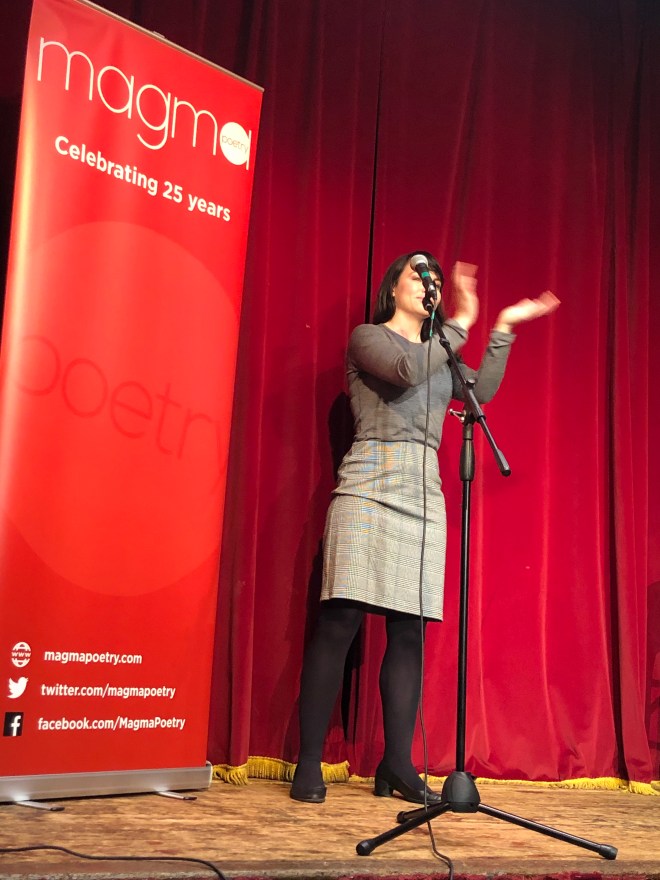
 Closing our evening of moon poems, we had the magnificent, questing Kostya Tsolákis. His set carried us from wilded woodland on Hampstead Heath to the thick vine that grows at his family’s stone house in Northern Greece – and continued his key work of making spaces to hold the textures of LGBTQ+ lives and loves. A star on the live scene, for his experimental, raw-edged, risk-taking performances, Kostya is a London-based poet and journalist whose poems address the personal and political in equal measure, queering the centre stage. His work has appeared in Magma, Wasafiri, Under the Radar, perverse and Strix, among others. He founded and co-edits harana poetry with Romalyn Ante, an online magazine for poets writing in English as a second or parallel language, which I’m lucky to be the reviews editor for. Our third issue is out now.
 DA: I judged it in terms of Michael’s feelings of comfort and safety with whomever he is talking to. There is an earlier part of the book when Michael takes his time to figure out if he wants to tell his school friend Daisy that he is gay. I think I come from the school of thought that you’re sexuality is not necessarily everyone’s business, and it’s up to each person to decide if they want to come out and who they want to come out to. Coming out isn’t something you just do once and it’s over and done with. Michael finds himself coming out over and over again. By this point in the book Michael has come out to many people including his extremely supportive mother. I wanted to show him having lots of positive coming out experiences, throughout the book. However, the barbershop isn’t a place I could in good conscience locate one of these positive coming out moments. I would not feel comfortable to talk about my sexuality in a barbershop. There’s a lot said in barbershops that makes them feel unsafe in many ways.

 DA: Polly at Hodder is a children’s book editor so Young Adult fiction was the only option if I was to publish with her. I also had interest from a poetry publisher to do The Black Flamingo as a straightforward poetry collection and a non-fiction editor at another publisher to rewrite it as a memoir but I wasn’t so interested in writing about myself, I wanted to try something else. So creating a character seemed more appealing to me and writing a verse-novel seemed like an exciting challenge. Polly gave me lots of editorial support along the way to make sure the story was appropriate for teenagers and I arranged a number of readings with school groups and university students whilst working on the book to check we were getting it right.
 AH: Your text combines the ongoing narrative of the novel-in-verse with shorter inset poems, laid out on lightly lined pages, as if taken from a notebook, and text messages in rectangular bubbles. Was it important to you to embrace multiple forms of typography, as well as different forms of poetry-making, within the project to create a more open, possible feeing?
 AH: Michael is Black-British-Greek-Cypriot, and part of The Black Flamingo is set in Cyprus, when he visits his mum’s family. He can follow Greek, but not speak it with any confidence. Not being able to speak your parent’s first language, as a result of growing up in the UK yourself, is something that Nat Linh Bolderston and Arjunan Manuelpillai are also exploring in their work. Was it a topic that you wanted to give space to?
 The first time I saw poet and editor Rachael Allen live a few years back, she performed her complex, vegan anthem, ‘Many Bird Roast.’ It’s a tumbling, shifting, exposing poem, that comes in “dandy and present”, and moves to a surreally different, but intensely truthful-feeling, place. Rachael gave it to the room with an energy which made the lines rise up like juggling balls, and then float, reverberatingly, as objects in a Dutch still life. In our conversation, we discussed pulsing boundaries until they bend and melt, why the horror genre, and poetry, can each have the ability to expose truth, where human and animal rights meet, why it is important to be “serious” and “childlike” simultaneously – and avoiding getting hung up on the ‘right’ language around poetry. I was able to ask Rachael about the nameless, ambiguous female figures who slip in and out of Kingdomland, and she explained how the title poem, which came to her on a train journey, was her debut collection’s starting place, and the skeleton which gave form and direction to the material which took shape around it.
  AH: I know that Kingdomland was written over a number of years, and that some work appeared in your two previous collaborative publications, Jolene and Nights of Poor Sleep. It nonetheless feels as if the collection was conceived as a whole, to be read consecutively, as well as through individual poems. Was that part of your intention?
 Born in Glasgow, and raised for the first years of her life in Scotland, the poet Yvonne Reddick has always had a profound affinity for wild, and mountainous landscapes. Her work explores the relationships between the natural world, and its human and animal inhabitants – within the dual frameworks of eco-poetics, and her own Swiss-French heritage. These deep interests have informed her three pamphlets – Deerhart, Translating Mountains, and Spikenard – and her academic research and publications on Ted Hughes. Meeting in Liverpool’s Bluecoats building, where she was due to read with Deryn Rees Jones at the conclusion of a year of mentoring under the inaugural Peggy Poole award, Yvonne and I began our interview among a clatter of teacups in the Bluecoats café, and finished it rattling back to Manchester on a late night train. We talked about writing in response to the loss of her father, and the creative workshops which Yvonne has led, drawing on making work from this experience. We also compared notes on the ways in which Brexit has impacted us as dual language women of joint English and European heritages. In conclusion, Yvonne previewed the forthcoming Loss issue of Magma, for which she and her fellow editor Adam Lowe received over 8000 submissions. Most recently, Yvonne has just won first prize in the 2019 Ambit Magazine poetry competition, judged by Liz Berry, for her poem ‘In the Burning Season’.


 YR: It was Deryn who helped me shape the oil poems. I don’t think I would really have had the courage to tackle that material if it hadn’t been for her encouragement. It’s a topic that I think I will run with. Going further back in my family tree, my grandmother’s father distilled oil from coal.